
Prepare for windshield damage enquiries: repair versus replacement, camera-equipped glass, comparable quotes, insurance questions, transport and expiry. Repair guidance is not a pass verdict.
General preparation guidance for private passenger cars. This is not a vehicle diagnosis, confirmed quote or available appointment.
Five checks for your next step.
Tick the items you have checked and identify the next question. Progress lasts while this page stays open and is not submitted.
0 / 5 items organized
These ticks are preparation notes, not official verification, identity checks or booking confirmation.
Related area and preparation resources
Start with the damage and a safe next step
A stone chip or crack in a windshield is a reason to arrange an assessment, not a reason to make a pass or fail prediction from a photograph. Begin with the immediate question: can you see adequately, and can the vehicle be moved safely? If visibility is affected or the damage appears serious, ask a workshop or glass specialist about a suitable transport arrangement before assuming you should drive there. A valid inspection certificate does not establish that newly damaged glass is safe.
Once the vehicle is safely parked, record when you noticed the damage, whether it appears to have changed, and whether the glass has previously been repaired. Check the current inspection expiry separately. The useful outcome of your first inquiry is a clear next step: an examination, information the provider needs, any assessment charge, and an explanation of transport and scheduling. It is not an online certificate that the car will pass.
This guide helps private passenger-car users prepare that conversation in Japan. It does not diagnose a particular windshield, instruct a repair, or promise an appointment. The scenarios below are hypothetical planning examples. Use the current instructions for your vehicle and the findings of the workshop that examines it. If there is an immediate danger, deal with that before a comparison form, a discount search, or an optional email request.
Source notes: NALTEC:審査事務規程・窓ガラス等の項目 ↗ · ガラスD:補修と交換の相談・判定に関する案内 ↗
Separate useful photographs from an actual assessment
Photographs can make an initial inquiry clearer when they are taken from a safely parked vehicle. An overview shows where the damage sits in relation to the whole windshield, while a closer view records the visible shape. Ask the provider which views it needs and how to submit them through its official contact route. Do not photograph while driving, press on the damaged area, or perform an improvised experiment to discover whether the crack will grow.
Treat the images as an introduction to an assessment. Lighting, reflections, surface contamination and camera focus can conceal information. A provider may need to inspect the actual glass before discussing repair suitability or the correct replacement part. A preliminary reply based on images may also change after examination. Keep those stages distinct in your notes rather than interpreting an encouraging first response as a confirmed inspection result.
Limit unrelated personal information in the images. If a registration document, home address or other identifying detail is visible, ask whether that detail is required before sending it. Use the official channel rather than a public social-media comment. Keep your original pictures privately so you can explain what you observed at the time, but do not rely on a later photograph to prove that the damage had exactly the same condition during an earlier visit. The final decision must account for the actual vehicle.
Source notes: ガラスD:補修と交換の相談・判定に関する案内 ↗
A repair guideline is not an inspection pass threshold
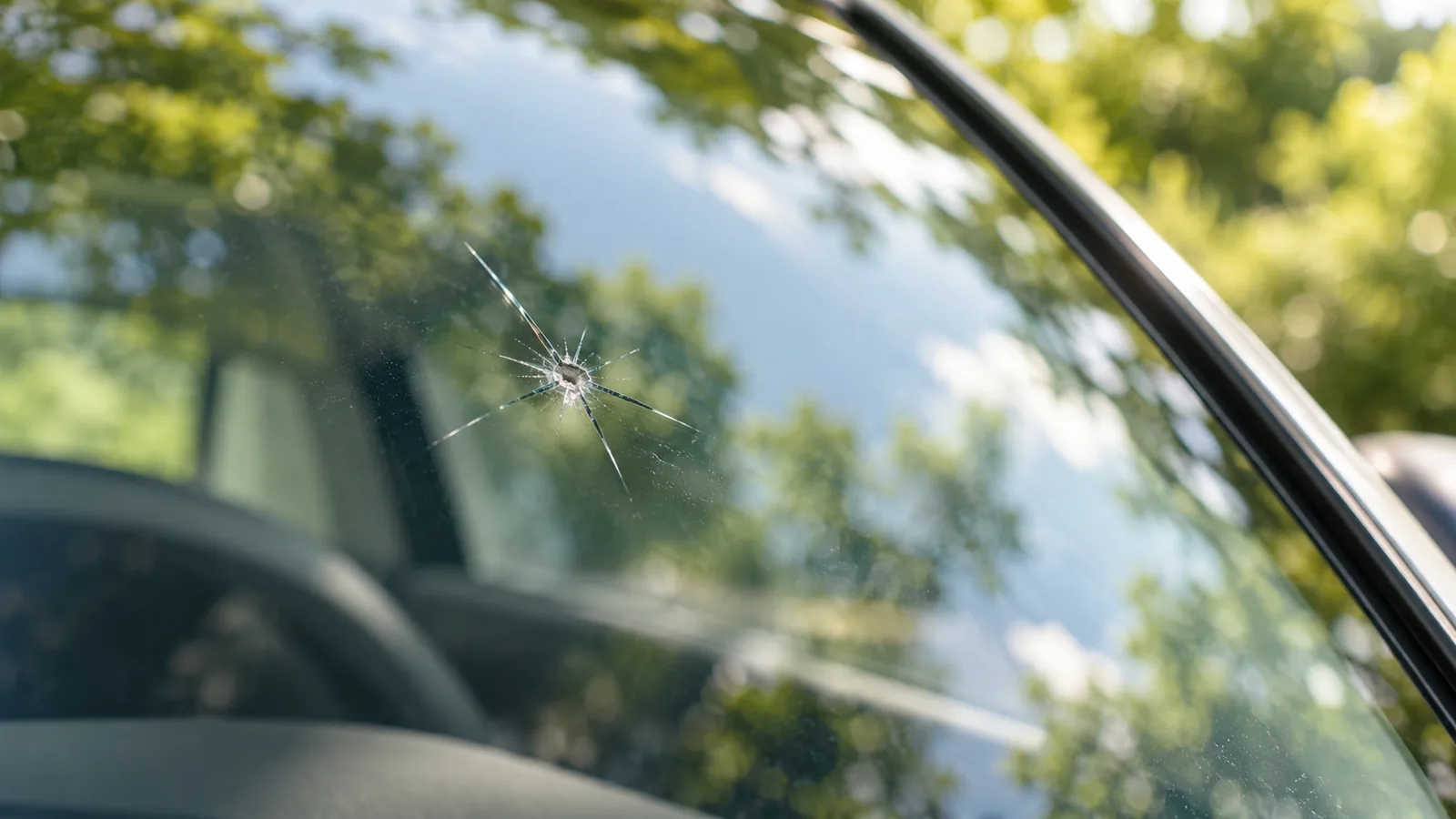
One of the most important distinctions is between a repairer's service guideline and an inspection standard. A specialist may describe the type, location or approximate size of damage it commonly repairs. That description helps determine whether its particular repair process is appropriate. It does not create a universal rule that every chip below that size passes Shaken, or that every repair above a certain price guarantees a pass.
The glassD service page illustrates this distinction: it explains that repair suitability depends on the damage and that it cannot itself determine whether a repaired vehicle will pass inspection. Use such provider information to formulate questions, not to substitute the provider's service criteria for the applicable inspection assessment. The NALTEC regulation index identifies the official inspection rules, including window glass and wipers; a workshop should explain how the relevant requirements apply to the findings on your car.
Ask three separate questions. What condition was found? Why is the proposed repair or replacement appropriate? What must be checked afterward? If the answer only repeats a coin-size comparison or says that many similar cars passed, request a vehicle-specific explanation. You are not asking reception staff to provide an official advance pass certificate. You are asking for the basis of the recommendation, its limits, and the next examination. Keeping those answers separate makes a quote comparison more informative without pretending to replace professional judgment.
Source notes: NALTEC:審査事務規程・窓ガラス等の項目 ↗ · ガラスD:補修と交換の相談・判定に関する案内 ↗
Compare repair and replacement as different work scopes
A repair quote and a replacement quote may describe fundamentally different work. Their totals cannot be ranked sensibly until you understand those differences. Ask what the repair is intended to achieve, whether a visible mark may remain, and what the provider would do if the damage changed afterward. For replacement, identify the proposed glass specification and the associated installation and checking work. The cheaper number is not automatically a cheaper version of the same service.
Use a two-column note with each proposal's purpose and limitations. One column might say preliminary repair assessment, subject to examination; another might say replacement recommendation, with the reason still to be explained. Do not fill an unanswered warranty field with the word guaranteed. Record the provider's actual conditions, who gave them, and the date. If a repair is unsuitable for this vehicle, a hypothetical low repair price is not an available option to compare against replacement.
Separate authorization stages as well. Permission to inspect is not necessarily permission to repair, order a glass panel, or carry out additional work. Ask when an order becomes committed and how approval is recorded. If a provider needs to dismantle or examine something before finalizing the estimate, clarify the charge and what happens if you decline the next stage. This protects the clarity of the discussion without asking the workshop to do unpaid diagnosis or to ignore a safety finding because a different service sounds less expensive.
Source notes: ガラスD:補修と交換の相談・判定に関する案内 ↗
Identify cameras and equipment before ordering glass
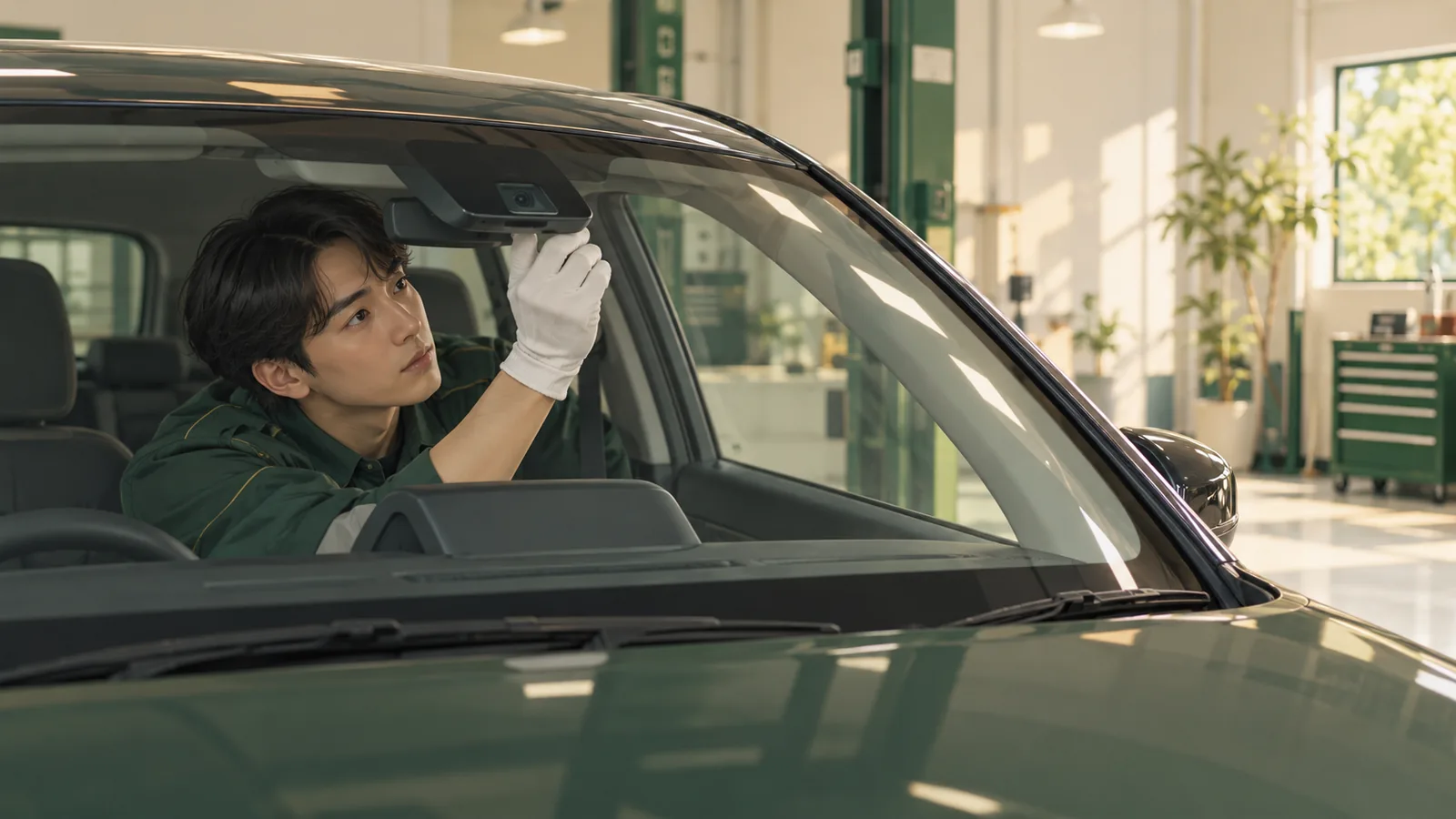
Many vehicles have equipment near or attached to the windshield. Before a glass order is placed, provide the model, year and known equipment, and allow the provider to confirm the correct specification from the vehicle information it needs. Two cars with similar names may not use the same panel or installation arrangement. An equipment detail omitted at the inquiry stage can change both the work scope and the completion plan.
MLIT's specified-maintenance framework includes relevant work affecting electronic control devices. The practical customer question is therefore not simply whether a business sells glass. Ask whether it can carry out the applicable work for your vehicle and how any required checks or adjustments will be arranged. Depending on the car and task, that may involve another properly equipped provider. Do not assume that every glass job needs identical calibration, or that an invoice label alone establishes that the required procedure was completed.
Request a description of the responsibility chain: who supplies the panel, who installs it, who performs any applicable adjustment, and who records the outcome. If stages are handled at different locations, ask about transport, charges and scheduling. Do not move a camera or attempt a calibration yourself based on a general article. The purpose of these questions is to make the proposal complete and understandable before authorization. They are not instructions for performing technical work, nor a statement that a particular shop has been certified or partnered with 車検.jp.
Source notes: 国土交通省:特定整備の制度 ↗
Keep wipers and visibility items separate in the estimate
A driver may notice a chip, streaking and a wiping noise on the same journey. That does not establish that all three observations have one cause or require one bundled solution. Describe what you saw in ordinary language: where a streak remained, whether it affected your view, and when the noise appeared. Let the workshop identify the relevant condition instead of naming a replacement part from a search result.
If the estimate includes wipers, washer-related work, cleaning or a surface treatment, ask for each item's purpose and charge. This is useful even when the provider has a package price. You should be able to understand which work addresses an observed defect, which is preventive maintenance, and which is an optional finish. A discounted package can still be a good choice, but it should not hide which items would be necessary for the vehicle's condition.
Do not test a damaged area aggressively, scrape it, or use a chemical treatment as a substitute for an assessment. Follow the vehicle and product instructions for normal care and ask the provider about any special precautions before examination. If your view is compromised, changing the budget or buying new wipers online does not establish that it is safe to drive. In the preparation checklist, keep glass assessment and wiper assessment as separate items so one completed conversation does not accidentally mark both concerns as resolved.
Source notes: NALTEC:審査事務規程・窓ガラス等の項目 ↗

Build a sequence around the actual inspection expiry
Work backward from the actual expiry recorded in your current inspection information. List the stages that must happen before collection: assessment, a sufficiently detailed quote, any parts order, installation or repair, applicable follow-up checks, inspection, and document updates. Some stages can be coordinated, but do not assume that an advertised repair duration includes the wait for every other stage.
MLIT extended the normal renewal window preserving remaining validity to two calendar months before expiry from April 2025. That gives a planning opportunity; it does not guarantee that a garage or glass supplier has a suitable appointment. Two calendar months also should not be replaced automatically with sixty days. Use the inspection-date tool to organize timing, then confirm the actual arrangements with the providers involved.
If the car's inspection has expired, do not plan ordinary public-road driving to a workshop. Discuss appropriate transport and relevant procedures instead. If the glass condition itself makes driving unsafe, deal with that even when the certificate is still current. These are separate constraints, and resolving one does not resolve the other. A sound plan records both the certificate status and the movement arrangement. Write down who confirmed the arrival time and whether the promised completion refers to glass work alone or to the entire inspection visit.
Source notes: 国土交通省:継続検査の2か月前受検 ↗
Normalize two quotes before comparing their totals
A useful comparison table starts with the same vehicle and the same observed problem. Record the assessment status, proposed panel specification, parts, labor, relevant adjustment, tax-inclusive total and unconfirmed charges. Keep the quote date and its validity conditions. If one provider has examined the vehicle and another has only seen a photograph, put that difference prominently beside the totals.
Consider a hypothetical comparison without assigning fictional market prices. Quote A includes installation but has an unanswered adjustment field. Quote B separately lists installation and adjustment. You cannot conclude that A is cheaper by treating its unanswered field as zero. The next action is to ask A whether the applicable work is included, excluded, or not yet assessed. Only then can you compare the scopes in a way that supports a decision.
The quote-comparison tool on 車検.jp organizes information you enter. It does not retrieve a confirmed live quotation from these businesses, secure a repair slot, or certify that a provider is suitable for your vehicle. Use its notes to distinguish confirmed figures from assumptions. If you try an illustrative amount to see how a budget changes, mark it as hypothetical and replace it with the actual answer before authorizing work. Comparing fairly also means considering transport and repeat visits when those are confirmed costs, while leaving future uncertain costs explicitly unresolved.
Keep insurance decisions separate from the repair recommendation
Whether a glass repair is covered is a question about your actual insurance contract and claim circumstances. A repair provider advertising insurance-related work does not establish that your policy covers the damage or that a claim has been approved. Contact the insurer through its official route and ask what information it requires, what conditions apply, and which decisions must happen before work starts.
Keep the workshop's repair proposal and the insurer's coverage response in different parts of your notes. They answer different questions. A workshop explains the work it recommends and its price; the insurer explains the contract and claim process. If a representative discusses a possible outcome, record whether it is preliminary or confirmed. Do not interpret a repair booking as claim approval, or send a provider's invoice in the belief that this alone guarantees reimbursement.
This guide does not recommend claiming or paying privately as a universal financial choice. Ask the insurer to explain any applicable excess, future implications and timing using your own contract. Then consider those confirmed details alongside the workshop quote. Keep policy documents and personal identifiers out of ordinary public comments and unnecessary website forms. If two parties need to coordinate, clarify what information may be shared and by whom. Your comparison becomes stronger when each answer remains attributed to the party qualified to give it, rather than being combined into one unsupported assurance that everything is covered.
Plan transport, loaner use and collection explicitly
An appointment for glass work, an inspection appointment and a loaner reservation are separate arrangements. Ask about each rather than using the word booked to cover them all. If vehicle movement is difficult, confirm collection or transport coverage, the handover location, any charge and the person responsible for coordinating the visit. A shop that appears nearby on a map may still require a complicated return journey after drop-off.
For a loaner, ask about the permitted driver, insurance and excess, fuel, mileage conditions, return time and what happens if the work takes longer than expected. Record the actual terms instead of treating free loaner as a promise that every related expense and every additional day is covered. If a family member will drive, confirm that condition before relying on the vehicle for school or work journeys.
Ask the repair provider about collection and safe use after the work. Do not substitute a general internet waiting time for the instructions applying to the installation or repair performed. The sensible planning question is when the provider expects the vehicle to be ready for the agreed use, and what could change that expectation. If a part arrives late or an examination changes the scope, request an updated schedule. Keep an alternative travel plan available rather than making an essential journey depend on an unconfirmed completion promise.
A hypothetical near-expiry planning example
Imagine a driver notices a chip with one week remaining before inspection expiry. This is a hypothetical example, not an account of a customer helped by this website. The driver first records the visible issue and asks whether the car should be brought in or transported. The initial inquiry includes the expiry date, the vehicle information and the need for a loaner. That makes the workshop aware of the whole constraint rather than only the cosmetic concern.
Suppose the first response suggests that repair may be possible. The driver still asks when the actual examination can occur, whether the reply is provisional, and how the inspection visit would be scheduled afterward. If the examination instead identifies a need for replacement, the driver asks about part availability and relevant follow-up work. A short advertised repair duration has not answered those replacement questions.
If the proposed sequence will extend beyond expiry, the next discussion concerns lawful transport and storage, not how to continue ordinary driving until the paperwork catches up. The driver keeps the previous estimate, obtains the revised scope and confirms additional authorization. No part of this example promises an appointment within a week. Its value is the sequence of questions: immediate safety, actual examination, suitable work, parts and checks, inspection timing, and collection. The same sequence can be adapted when more time is available without making urgency disappear from the plan.
Ask for a clear authorization boundary
Additional findings can change a repair plan. Before that happens, agree how the provider will contact you and which work requires another authorization. You might ask to receive the reason for a change, the new parts and labor, the revised tax-inclusive total and any effect on collection. A clear response arrangement is more useful than a vague instruction to do whatever is needed, especially when several providers are involved.
Separate an assessment budget from an approved repair budget. Ask whether a diagnostic or examination charge is payable if you do not proceed, and whether it is included or credited if you do. If a glass panel must be ordered specifically for the vehicle, clarify the order and cancellation conditions before approval. Do not assume that cancelling an inspection booking also cancels a parts order or a separately arranged calibration appointment.
Your budget does not change safety requirements or inspection standards. If the recommended work exceeds what you can presently afford, ask about the appropriate way to pause, store or move the vehicle and about any permissible alternative repair proposal. Do not ask a provider to describe unsafe continued use as acceptable simply to keep the bill within a limit. The comparison checklist is designed to reveal these unresolved decisions. It is not a negotiation script for removing any item that sounds expensive without understanding why it was proposed.
Collect the records that explain what was completed
At collection, compare the invoice with the work you approved. Confirm whether repair or replacement was performed, which relevant parts or glass specification were used, and what accompanying checks were completed. Request the applicable warranty terms and aftercare instructions in a form you can retain. If a follow-up visit is needed, record when and why rather than treating collection as the end of every obligation.
When inspection was part of the arrangement, distinguish completion of the glass work from completion of the inspection and its current records. Ask what documents are returned and how to confirm the updated expiry. A repair receipt alone does not prove that a separate inspection stage was completed. Keep any explanation of deferred or optional work so it is not forgotten when the immediate deadline has passed.
For future discussions, retain the service date, mileage, repair history, provider contact, relevant photographs and the symptoms that should prompt another inquiry. Do not interpret the existence of a warranty document as permission to ignore a new change in the damage or visibility. Contact the responsible provider if you notice a concern. Good records make that conversation easier because you can explain what was done and when; they do not themselves certify safety, prevent a later problem, or establish that a different provider will accept the same repair proposal unchanged.
Use local information and a voluntary preparation pack
Local pages and postcode information can help you organize where to seek assistance. They do not establish that every address has a suitable glass repairer, that a listed business collects vehicles from the whole municipality, or that there is a slot today. Japan Post's postcode data describes addresses. Service coverage must be confirmed with the actual provider, including whether it can handle the equipment and work required for your vehicle.
Use the related area links to orient your search, then prepare one consistent inquiry for the providers you choose. A short message containing vehicle details, expiry status, the visible issue and the requested assessment is more useful than repeated vague requests for the cheapest repair. Keep replies in a table with the unresolved questions. The free tools can help you organize those answers without registering or sharing them automatically with a garage.
The preparation pack is available to use immediately without email. An optional email request is a separate convenience, subject to the site's displayed readiness and privacy conditions. Confirmation of an inbox is not proof of car ownership, a verified expiry date, a confirmed booking or permission to send marketing. Choose the tools that help you act next, and use the provider's official channel for a vehicle assessment. This guide's purpose is to make that real conversation more complete, rather than to collect information that cannot yet be used to deliver a promised repair or appointment.
Source notes: 日本郵便:郵便番号データ ↗
FAQ: Windshield damage and inspection preparation
Will a small stone chip definitely pass Shaken?
No advance guarantee follows from its size. Arrange an assessment of the actual damage and its effect on visibility. A repairer's general service guideline is not a nationwide pass threshold, and a photograph does not substitute for an examination.
Does sending photographs make the price final?
Not necessarily. They can support an initial inquiry, but the provider may need to examine the vehicle and confirm the part specification. Record whether the figure is preliminary, what it includes, and which findings could change it.
Does repair make the glass completely like new?
A visible mark may remain. Ask what result the provider expects for the examined damage, what limitations apply, and what to do if it changes later. Do not interpret repair as a promise that a crack can never develop again.
Does every windshield camera require identical adjustment?
No universal procedure should be assumed. Ask the provider to identify the requirements for your specific vehicle and task, and who will perform and record any applicable work. Do not move or adjust the equipment yourself.
Can replacement and inspection finish on the same day?
They may depend on different bookings, parts and checking stages. Ask for a confirmed sequence and collection plan. An advertised service duration is not evidence of today's availability or a guarantee that the entire visit will finish within it.
Should I enter an unanswered charge as zero?
No. Mark it unconfirmed and ask whether it is included, excluded, or dependent on assessment. Zero is a factual price claim. Using it for missing information can make an incomplete quote appear cheaper than a complete one.
Will insurance remove every personal expense?
That depends on the actual policy and claim. Obtain the insurer's explanation for your contract and distinguish preliminary guidance from approval. A workshop's insurance service advertisement does not establish coverage, reimbursement, or the absence of an excess.
Can I drive to a glass shop after inspection expiry?
Do not plan ordinary public-road driving with an expired inspection. Discuss appropriate transport and relevant procedures. Damage-related safety and compulsory-insurance validity are separate matters to check rather than assumptions resolved by arranging a repair appointment.
Must I supply an email for the preparation pack?
No. The immediately usable pack is available without email. Optional delivery and optional promotional preferences are separate. Any displayed readiness restriction remains applicable; a saved address must not be treated as confirmed or marketable automatically.
Does this guide certify a pass or reserve a slot?
No. It provides general planning information and original hypothetical examples. A vehicle assessment, confirmed quotation, available appointment and completed inspection must each be established through the appropriate provider or official process.
References and primary sources
Checked: 2026-10-05. Confirm current procedures, prices and conditions with the official source and workshop. Hypothetical amounts and scenarios are not market-price guarantees or customer results.
General preparation guidance. This is not an individual vehicle assessment. See our editorial policy for sources and corrections. Editorial policy →
Turn the guide into a plan.
Organize confirmed conditions and prepare the questions for your workshop.
Open the free tool