

Identify the recorded failure, confirm the applicable retest route, compare repair scope, organize returned documents and plan transport without confusing procedural deadlines with road validity.
General preparation guidance for private passenger cars. This is not a vehicle diagnosis, confirmed quote or available appointment.
Five checks for your next step.
Tick the items you have checked and identify the next question. Progress lasts while this page stays open and is not submitted.
0 / 5 items organized
These ticks are preparation notes, not official verification, identity checks or booking confirmation.
Related area and preparation resources
First, identify the failed item and the two separate deadlines
A failed inspection needs a specific next step, not a rushed search for a different garage. Start with the item recorded as nonconforming, the documents returned to you and the expiry date of your current inspection certificate. Ask the inspection office which return procedure applies. Then separate the repair appointment, the retest arrangements and the journey between them. Those tasks have different owners and may not fit into the same afternoon. This guide focuses on preparing for a private passenger vehicle's continuing inspection, rather than new registration or structural changes.
Keep two dates visible throughout: the existing inspection expiry and any deadline shown on a limited inspection certificate. A procedural retest window is not an extension of permission to drive. NALTEC explicitly distinguishes these. The official documents and the receiving office determine your case. 車検.jp provides preparation tools and questions; it cannot decide conformity, issue certificates, see inspection-office capacity or book a repair. An appointment, an estimate and a successful inspection are different outcomes. Before moving the car, establish which outcome you actually have and which one remains pending. If a serious safety concern has been identified, ask the workshop about transport even when the old certificate has time remaining. Paperwork alone is not a diagnosis of roadworthiness.
Source notes: NALTEC:不適合の場合の再入場・限定証・移動 ↗
Turn the result into a precise repair question
Write the finding in the wording used on the official inspection record. A phrase such as "lights problem" is too broad to guide a useful repair conversation. You want the affected side, the reported test item and any measurements or explanation already provided. If you cannot understand a term, ask for a plain-language explanation before trying to translate it yourself. A photograph of the document for your own reference may help you prepare, but it does not replace the original paperwork requested at a later visit.
Create three note fields: what the examiner recorded, what the workshop thinks caused it and what work the workshop proposes. Leave the last two blank until you receive an answer. This prevents a suspected cause from becoming an invented certainty when you call another provider. It also makes it easier to notice whether two garages are discussing the same issue. A quote for a replacement unit and a quote for an adjustment cannot be compared merely by looking at their totals.
Keep optional recommendations in a separate part of the note. You can ask whether a recommended service is required to address the failed item, preventive maintenance for later use or a convenience option. Do not decide that a safety repair is unnecessary simply because it costs more than expected. Equally, do not approve a long list without understanding its purpose. The useful goal is a documented explanation and a clear decision, rather than winning an argument about the word "failed."
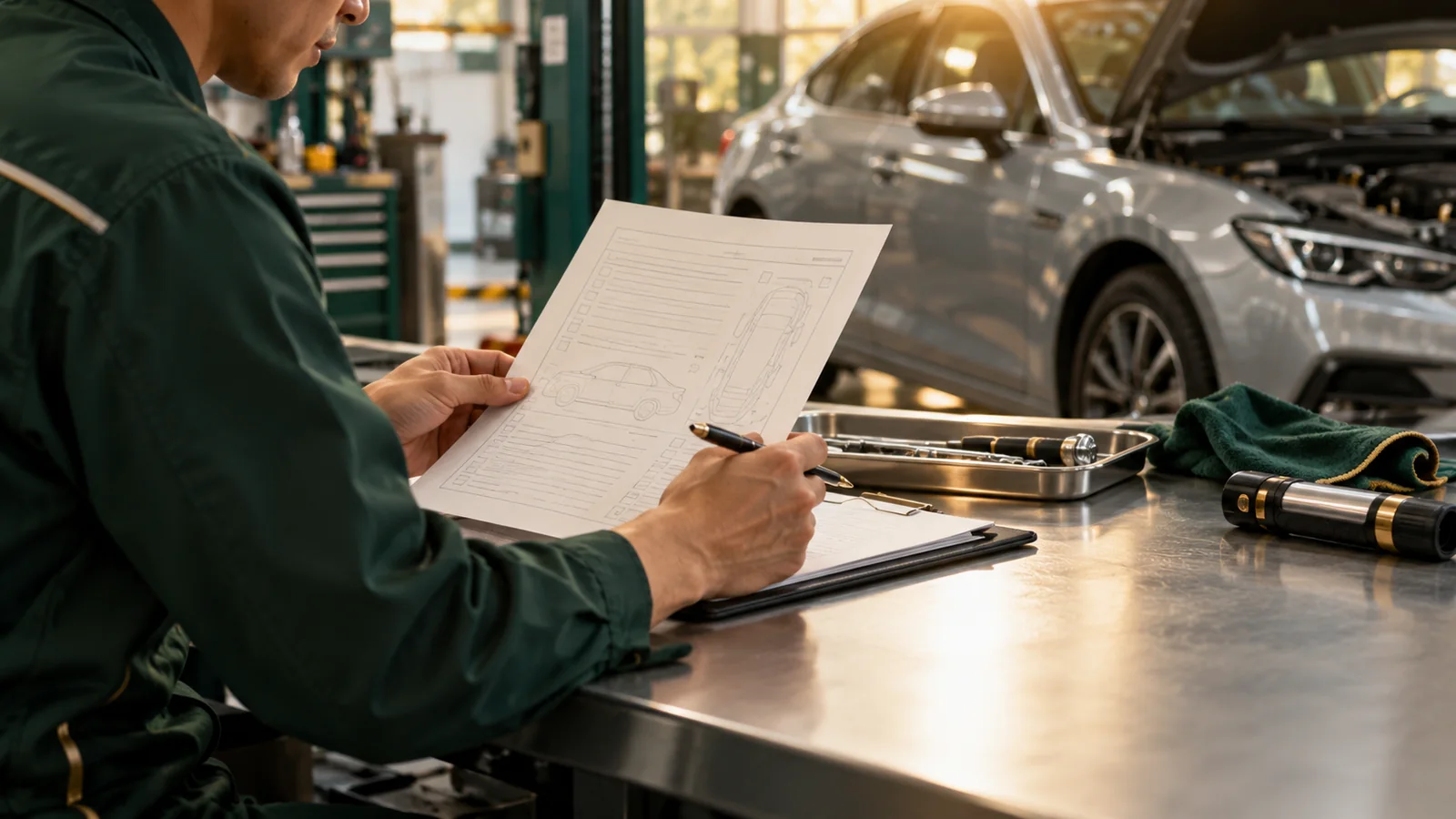
Choose between a same-day return and a later retest
The official procedure matters more than a general promise that a fault can be repaired quickly. NALTEC describes a same-day return within examination hours, with two reentries under one application after the initial entry. The Light Motor Vehicle Inspection Organization publishes its own kei retest conditions. Confirm your category, whether a limited certificate has been issued and what paperwork must accompany the return. Do not copy a fee or reservation rule from a story about a different type of vehicle.
For planning, work backward from the receiving office's applicable closing arrangements. Allow for diagnosis, approval of the work, repair, any workshop check and transport. Ask the workshop for a realistic assessment rather than its fastest possible scenario. If an uncertain parts delivery is the deciding factor, write "delivery not confirmed" beside the plan. It is more useful than assigning a guessed completion time and building the rest of the day around it.
Set a decision point before you leave for repairs. At that time, you will either have enough confirmed information to attempt the same-day route or you will organize a later visit. The decision point is your planning aid, not a new official deadline. Tell the workshop why you need an update by then. Avoid asking staff to rush a safety check so you can reach a queue. A calm switch to the correct later procedure can prevent an unnecessary second journey, a missed document or an unsafe drive.
Source notes: NALTEC:不適合の場合の再入場・限定証・移動 ↗ · 軽自動車検査協会:再検査の条件と返却資料 ↗
Read the limited certificate as a procedural document
Read a limited inspection certificate carefully rather than treating it as a receipt. Find the actual deadline, the recorded items and the route the office tells you to use after repair. The retest scope and the application procedure belong to that official process. If the wording is unclear, ask the issuing office to explain it with the document in front of you. Do not rely on an internet calculation when a specific date is already printed on the certificate.
For your calendar, use separate labels: "existing inspection expires," "limited certificate deadline," "repair appointment" and "retest arrangement." A single entry called "car deadline" hides the dependency you most need to understand. Add a reminder early enough to obtain an answer if a repair is delayed. Your reminder should prompt a conversation; it cannot extend the document's validity or establish eligibility for a different procedure.
Consider ordinary scheduling problems before they become urgent. The workshop may close on a weekday, the person who approves additional spending may be away, or the replacement part may not arrive as expected. Ask which unresolved task would prevent the planned return. Then give that task a named owner. For example, the workshop checks delivery, you prepare the papers and the inspection office clarifies the submission route. This division makes progress visible without pretending every stage is already confirmed. Keep the physical document safe and carry it in the format requested by the responsible office.
Source notes: NALTEC:不適合の場合の再入場・限定証・移動 ↗ · 軽自動車検査協会:再検査の条件と返却資料 ↗
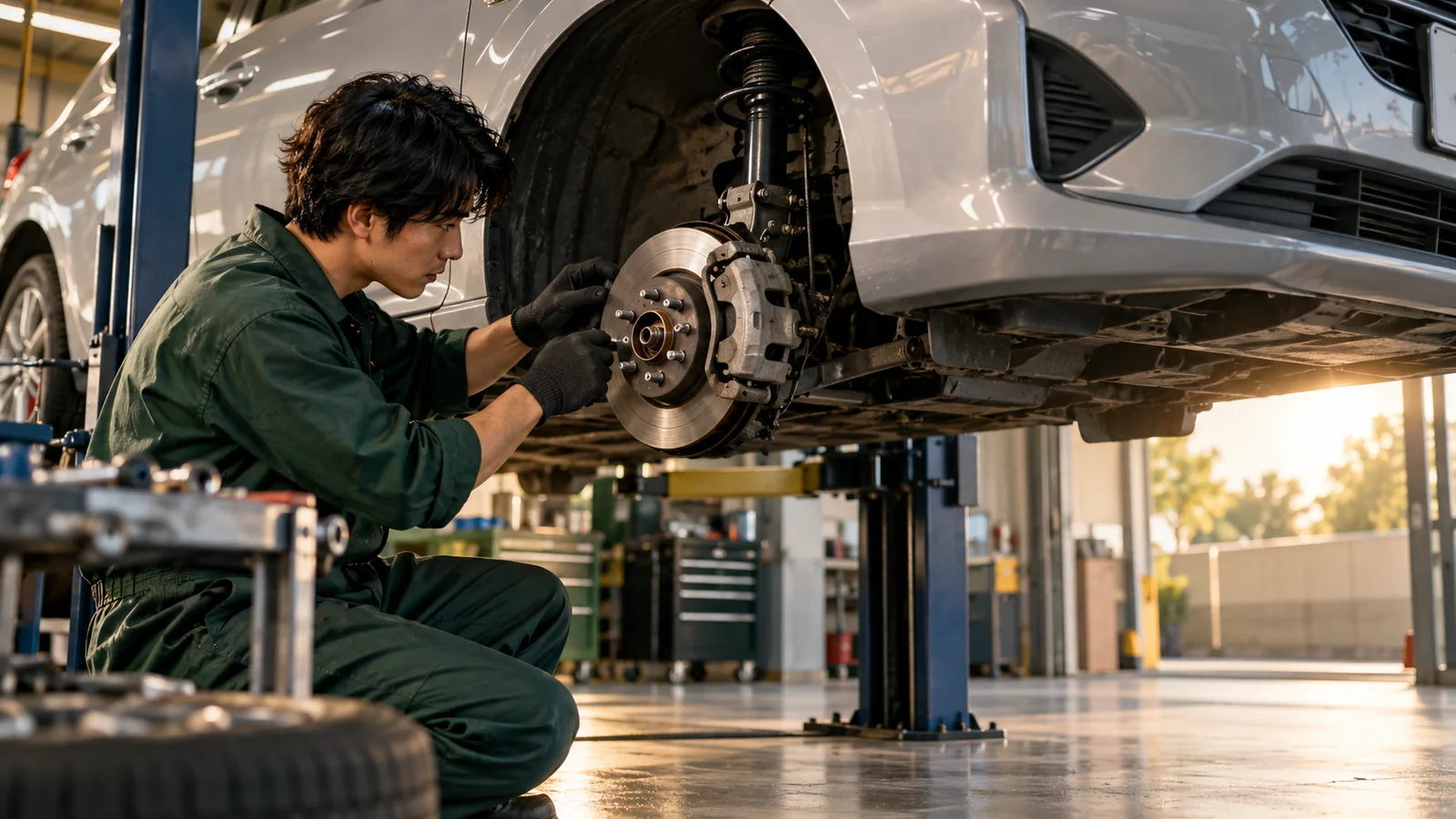
Prepare a short workshop enquiry that gets a usable answer
A useful first enquiry is compact: vehicle category and model, the recorded failed item, current inspection expiry, any limited-certificate deadline and the dates you can make the car available. State whether the car is already at a workshop or parked elsewhere. Ask the receiving provider which additional information it needs for an assessment. Avoid attaching identity documents or a complete ownership history simply to ask whether a repair service is available.
Separate three questions that are often squeezed into "Can you fix it today?" Ask when the fault can be assessed, whether the relevant repair is offered and what must happen before completion can be estimated. Then ask whether a post-repair measurement is included. A garage may have diagnostic capacity without having the required part, or may stock the part without having a suitable appointment. An honest partial answer is more valuable than an ambiguous yes.
Here is an original enquiry template you can adapt: "The inspection record identifies this item. My existing expiry date is this date, and I can bring the documents requested. Could you assess the cause, explain the proposed work and confirm whether the planned retest route affects what you need from me? Please tell me before ordering parts or beginning additional work." Replace every placeholder with verified information. The template requests a clear conversation; it does not imply that a provider has agreed to inspect your car. Save the response with the date so you can distinguish a tentative estimate from a confirmed appointment.
Compare the work scope before comparing prices
Normalize the scope of each quote. Separate assessment, parts, labor, measurements after repair, administrative handling and vehicle transport. Ask whether the amount is tax-inclusive and whether a second visit could add a charge. A short quote may be sufficient for a simple job, but the missing lines still need an explanation. Do not assume a service is included because another garage normally includes it.
If different repair options are offered, compare them as different products. A used assembly, a repaired original unit and a new unit can have different availability, condition and warranty arrangements. Ask the workshop to explain compatibility and any adjustment needed after installation. Your role is to understand the proposed option and approve it; a website calculator cannot verify that a component fits your particular vehicle or that a repair will restore conformity.
Use the quote-comparison tool linked with this guide for confirmed numbers. Put uncertain items in your notes rather than entering zero. An unquoted transport charge is unknown, not free. Likewise, an expected part delivery is not a guaranteed completion date. If one provider cannot yet estimate an item, compare the known scope and ask for the missing condition. This keeps the discussion fair to both garages and helps you avoid choosing a superficially lower number that describes less work. Agree on how additional findings will be presented before work begins, including the amount requiring your further approval and a contact route you can actually answer during the appointment.

Budget for the procedure and the repair separately
Build a budget with three columns: already paid, newly confirmed and still unknown. Put inspection fees and workshop charges on separate lines. The current NALTEC fee page records the April 2026 revision and distinguishes procedure categories. Use the relevant current table and the responsible office instead of copying an older personal account. A workshop's repair and handling charges are separate from those official amounts.
This separation makes everyday decisions easier. You may already have paid for an initial workshop assessment but still need to approve a replacement part. You may have paid a transport company for one journey but not for collection after completion. Record these as individual commitments. A previous payment should not disappear from your budget just because the next provider starts a new invoice, and a possible future charge should not be presented as a settled fact.
Ask about payment timing before delivery of the car. Does the garage require a deposit for a special-order component? Which items are due when you collect it? What happens if you decline a proposed repair after diagnosis? The answers depend on the actual arrangement, so obtain them directly. If the total changes, update your worksheet and preserve the earlier quote as the earlier quote. Do not silently overwrite it and lose the explanation for the difference. The point of the worksheet is not to calculate a supposedly universal retest price. It is to help you understand your own next payment and avoid surprises that can delay a necessary repair.
Source notes: NALTEC:2026年4月改定後の費用目安 ↗
Plan transport without assuming driving is permitted
Treat transport as its own booking. The pickup location, loading access, vehicle condition, key handover and receiving workshop's arrangements all need confirmation. A transport company can explain what information it needs for the actual collection. If a parking structure has limited clearance or the car is behind other vehicles, disclose that before accepting a quote. A distance-only estimate may not describe the work required at your location.
Do not plan to drive an expired-inspection vehicle on public roads. Where a temporary-operation permission might apply, confirm its purpose, route and other conditions with the issuing office, including the insurance requirements. A general article cannot grant permission. Nor should a paperwork option be used to avoid addressing a serious mechanical concern. Discuss the actual vehicle condition with a qualified workshop and select a transport arrangement appropriate to it.
Create a handover note for the receiving garage. It can say where the car will arrive, who has the keys and how the transport provider will contact reception. Confirm that somebody will be able to receive the vehicle; arrival at a closed gate is not the same as admission to a repair appointment. Keep your own travel plan separate. You may need a train, a family lift or a taxi after the vehicle leaves. Planning this early reduces pressure to make an unsafe journey simply because you have not arranged a way home. The expired-inspection guide linked below develops the transport questions in more detail.
Source notes: NALTEC:不適合の場合の再入場・限定証・移動 ↗
Make the document handover easy to check
Put the returned inspection paperwork in one protective folder. Add a separate checklist of the document names the responsible office has asked you to bring. The Light Motor Vehicle Inspection Organization specifically tells kei applicants to bring the papers returned after the failed examination. Match the list to your case rather than assembling a generic bundle from a blog post about another procedure.
At each handover, record what went to the workshop and what remains with you. A simple dated note is enough. If a family member delivers the car, make sure that person knows which vehicle the folder belongs to and which question still needs answering. Do not bury the expiry date under several unrelated invoices. Keep current documents together and put historic records in another compartment so reception does not have to guess which page is relevant.
If a document is missing, ask its issuer about replacement and tell the receiving office the actual situation. A screenshot may help explain the problem, but you should not assume it satisfies an original-document requirement. When a garage asks for a digital copy, verify the receiving address and purpose before sending it. There is no need to upload official papers to 車検.jp to use a preparation checklist. Keep administrative evidence with the organizations handling your procedure. This approach makes the handover more reliable while avoiding an unnecessary collection of personal and vehicle records across several websites.
Source notes: 軽自動車検査協会:再検査の条件と返却資料 ↗

Work through three planning examples
Example one: a driver has a recorded failed item, the workshop has assessed the cause and the repair can realistically be completed with time for a return. The useful next action is to confirm the return conditions and the post-repair check. The driver should not add an unrelated service simply because the car is already in the workshop. Equally, the driver should not insist on a rushed handover before the agreed check is finished. Every confirmed step should have a time and an owner.
Example two: the garage can assess the car, but the replacement component's delivery has not been confirmed. The driver cannot yet make a reliable completion promise to an employer or family member. The next action is to obtain a delivery update, confirm the applicable later procedure and arrange alternative transport. A cheaper quotation with an uncertain part may still be worth considering, but it should be compared on that basis, not described as a guaranteed same-day option.
Example three: the existing inspection has expired before the repair is completed. The driver needs a transport plan that addresses that status, not a faster route on a map. Workshop admission, transport and the official retest process must be coordinated. These are hypothetical planning examples, not customer experiences or evidence of a provider's success rate. Use them to mark your own worksheet as confirmed, waiting for an answer or not applicable. The best next step is whichever resolves the dependency preventing safe progress, rather than whichever sounds most urgent in an advertisement.
Check five things before the planned return
Before the planned return, review five items: the repair stage, the document folder, the official procedure, transport and payment. Ask the workshop what "ready" means in its latest message. It could refer to receiving a component, finishing installation, completing a workshop measurement or preparing collection paperwork. You need the stage that supports your next action, not merely a reassuring word. Write down any remaining dependency and who will resolve it.
Review transport in both directions. Confirm the receiving location and handover arrangement, then plan your journey home or to work. If the car will stay overnight, ask about collection timing and your personal belongings. Keep the phone charged and the requested documents accessible. None of these preparations determines whether the car passes, but each can prevent an avoidable missed visit or an unclear handover.
If the plan changes, preserve the earlier appointment record and add the confirmed replacement details. Notify the people whose part of the plan depends on the change. A family member collecting the car and a recovery operator delivering it should not be working from different versions of the schedule. Use the free preparation pack as a working sheet, without providing an email if you prefer. Where an optional email request is available, read the purpose and consent information before choosing it. Preparing the car and requesting messages are separate choices; the checklist remains useful even when you do not subscribe.

Agree who handles each remaining step
Ask the garage to describe the boundary of its service. Are you purchasing assessment and repair only, or also a particular inspection and paperwork service? Who submits the necessary documents, and who collects the final records? A broad phrase such as "take care of everything" can conceal a step neither party has accepted. Establish the exact scope before leaving the car, especially when you are moving from a self-arranged inspection to a workshop-managed repair.
Use a responsibility list with one line per task. For example: workshop explains the diagnosis; customer approves the quoted work; transport provider arranges collection; customer confirms the official return procedure. Change the list to match the real contract. Do not assign work to a provider merely because a national brand offers something similar at another location. The local provider must confirm what it is offering to your vehicle.
Record how further approval will be obtained if the first repair does not resolve the issue. A garage should be able to tell you what it proposes, but your planning note should not require a guarantee that no additional fault can exist. Ask for an explanation and a revised estimate before authorizing further work. After completion, preserve the invoice, any warranty terms and the documents you actually receive. These records help with later questions and future inspection preparation. They also keep an initially stressful retest from becoming an unclear trail of phone calls that nobody can reconstruct.
Resolve a stalled conversation without starting over
If progress stops, identify the unanswered question before making another call. Are you waiting for a parts-delivery update, your own approval of a revised quote or an official explanation of the return procedure? These are different conversations. Give the recipient the date of the previous discussion and the particular item still pending. Ask when an update can reasonably be provided and what you should do if it does not arrive. This keeps the next contact focused instead of repeating the complete story to every person who answers.
If you decide to consult another provider, first record what has already been ordered or authorized. A new enquiry does not automatically cancel an earlier instruction. Ask the original workshop about completed work, ordered components and the release arrangements for the car. Then explain the remaining task accurately to the new workshop. Avoid presenting an assessed vehicle as an untouched vehicle or claiming a repair was completed when only a component was ordered.
Keep the notes factual and brief. You do not need to decide who is at fault to establish the next dependency. A dated answer, a revised written scope and a confirmed handover arrangement can be enough to restart progress. Preserve the relevant invoices and approval messages in one place, and keep the next action visible so that a stalled conversation does not become an unnecessary duplicate booking.
FAQ: Failed inspection and retest preparation
Should I immediately try another garage?
First establish the recorded issue and what the next provider is being asked to do. Changing providers is not a repair. Keep the official finding, proposed work and transport situation available so a second assessment starts from accurate information rather than a vague account of what happened.
Does a fifteen-day retest window let me drive freely?
No. The procedural window and the existing inspection expiry are separate. Read the actual documents and ask the responsible office when anything is unclear. Plan transport around the real status of the vehicle, rather than assuming the most convenient interpretation.
Can the repair always be completed the same day?
No. Diagnosis, parts, workshop capacity and the check after repair all matter. Ask which stage the garage can confirm and which stage remains uncertain. Make a fallback travel plan before the afternoon becomes dependent on an unconfirmed delivery or completion estimate.
Do kei cars use exactly the same procedure?
Use the Light Motor Vehicle Inspection Organization's guidance for a kei vehicle. Explain the original inspection, the papers returned and any certificate issued. A rule for a registered passenger car should not be used as an automatic answer to a kei application.
Is the official retest fee my only new cost?
It may not be. Assessment, repair, parts, transport and handling can be separate. Ask the actual providers to define their scope and payment timing. Mark unquoted amounts as unknown in your budget rather than entering zero and assuming everything is included.
Can I drive an expired vehicle because I booked a visit?
A booking does not grant road permission. Ask about appropriate transport and, where relevant, the conditions of any temporary-operation application. Confirm vehicle safety separately with the workshop. Do not use a scheduled appointment to justify a journey whose conditions are unresolved.
What should I compare in repair quotations?
Compare the diagnosed issue, proposed work, parts option, tax-inclusive total, post-repair checks and additional-work approval. Keep completion estimates separate from confirmed dates. The lowest displayed total is not meaningful when the other quotation includes work or transport the first one has omitted.
What if I have lost returned inspection papers?
Contact the issuer and explain the situation to the receiving office. Ask what replacement or presentation procedure applies. A picture can help explain the problem, but do not treat it as permission to ignore an original-document requirement. Keep any replacement application status accurate.
Can 車検.jp make my official retest appointment?
This site provides general preparation tools and links. It does not decide inspection results, access official vehicle records or confirm available appointments. Use the responsible office and workshop for the real arrangements, and record the answer with its date and conditions.
Must I provide an email to use the preparation pack?
No. The pack can be opened without email. If you choose an optional email request when available, read the purpose and consent information first. A request, a first confirmation and a completed inspection are different events, and none should be described as another.
References and primary sources
Checked: 2026-10-04. Confirm current procedures, prices and conditions with the official source and workshop. Hypothetical amounts and scenarios are not market-price guarantees or customer results.
General preparation guidance. This is not an individual vehicle assessment. See our editorial policy for sources and corrections. Editorial policy →
Turn the guide into a plan.
Organize confirmed conditions and prepare the questions for your workshop.
Open the free tool