
Understand a costly inspection estimate, compare equivalent repair scopes, ask for a second opinion, and weigh repair against replacement with clear assumptions.
General preparation guidance for private passenger cars. This is not a vehicle diagnosis, confirmed quote or available appointment.
Start with the work behind the number
A quote that exceeds your expectation is a reason to ask for an explanation, not immediate proof that the workshop has proposed unnecessary work. Equally, you do not need to authorize something you do not understand. Begin by separating the statutory charges, inspection or service fee, additional work, and other costs. The total becomes easier to assess once you can see which part has changed your budget.
This guide is a practical method for reading an estimate and, where useful, seeking a second opinion. It is not a ranking that labels a particular workshop expensive or dishonest. Your vehicle’s condition and the proposed scope matter more than a general price found online. If there is a symptom that raises a safety concern, ask about driving or transport before planning visits to several garages. A cost comparison should help you make a sound decision; it should not encourage you to move an unsafe vehicle simply to collect another number. Keep the original estimate and work through it calmly, one unclear item at a time.
Source notes: 国土交通省:点検整備の必要性 ↗
Ask what “necessary” means for each item
The word necessary can cover different reasons for work: addressing a finding relevant to the inspection, repairing a reported fault, or recommending preventive maintenance. Ask the workshop to explain the reason for each item rather than treating the entire additional-work section as one category. Do not independently remove safety-related work merely because you want the total to fall.
A productive question is, “What finding supports doing this now, and what would be the consequence of postponing it?” That invites an explanation you can use. Ask the branch to distinguish measured or observed facts, its recommended timing, and anything still uncertain. You do not need to challenge the technician’s role to request understandable information. If an abbreviation or part name is unfamiliar, ask for a plain-language description of what the component does and why it appears on the estimate. Record the answer beside the line item. This creates a clearer basis for a second opinion than sending another garage a total and asking whether it can beat the price without knowing what the first workshop actually proposed.
Source notes: 国土交通省:認証工場と指定工場 ↗
Organize the estimate into four useful groups
For your own comparison, use four groups: statutory charges, inspection and basic service work, repairs or replacements, and practical extras such as transport or a loaner. A workshop’s document may use a different layout; preserve its original descriptions while mapping them into your worksheet. Confirm whether the figures include tax and whether a displayed discount has already been applied.
Keep an unknown item marked for clarification rather than entering zero. Also distinguish a preliminary estimate from a final quote issued after examination. They represent different levels of knowledge about the car. Add the document date, the date you confirmed it, and a short description of the scope. If the amount changes later, those details help you understand why. The worksheet should not erase the workshop’s qualifications to make the comparison look tidy. A range with an explained condition can be more informative than a precise figure whose exclusions are hidden. Your aim is to make the documents comparable while retaining the uncertainty that still matters to the decision.
Compare the repair package, not just the part price
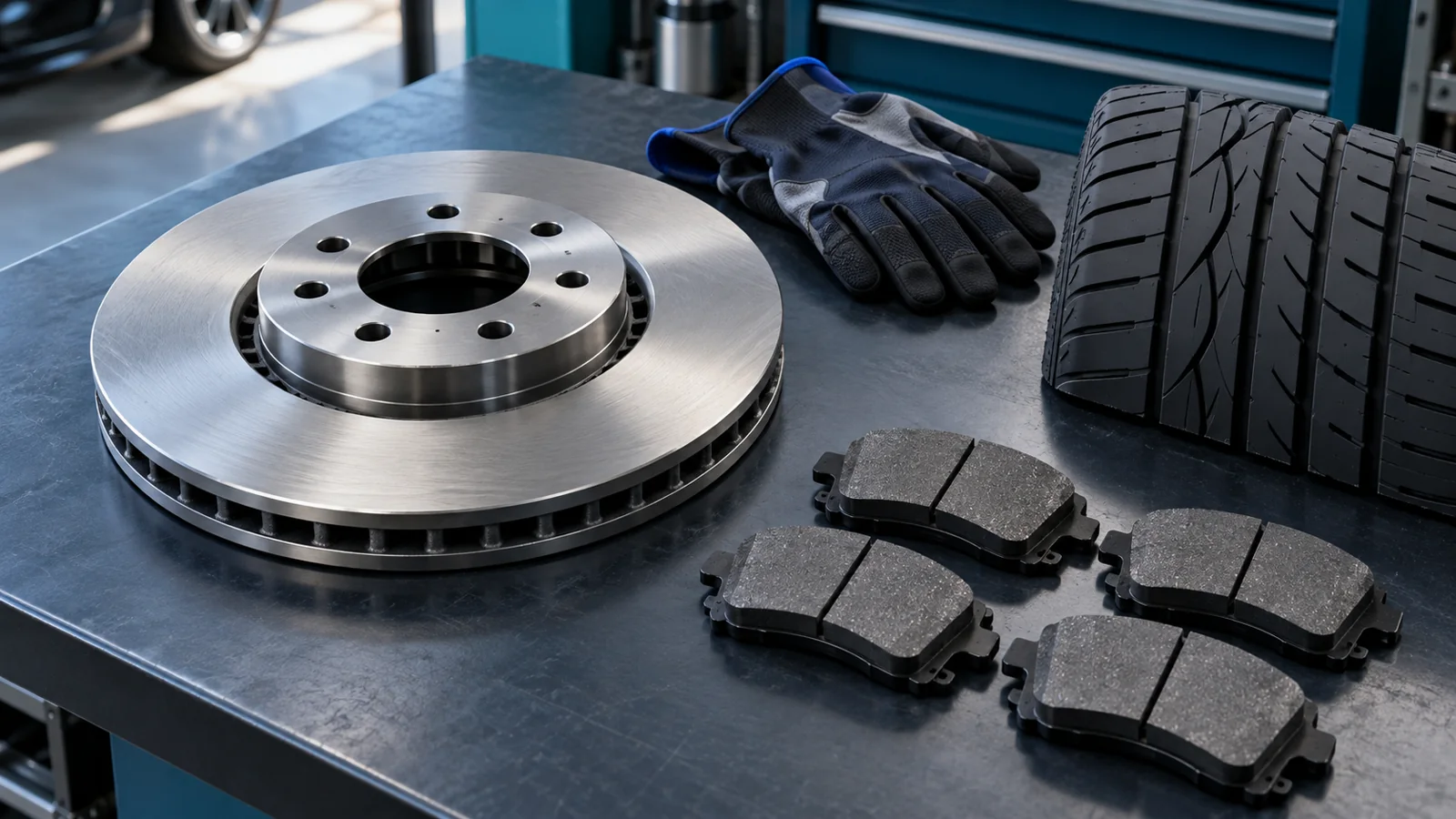
An online component price and a workshop repair estimate are not automatically the same product. The repair may include specification checks, labor, related tasks, post-repair checks, and warranty arrangements. Ask what is included before concluding that a difference is simply a markup. If you are considering supplying your own part, discuss acceptance and conditions with the workshop before purchasing it.
When several components appear together, ask whether they are independent replacements or related parts of the same job. That can explain why removing one line may not reduce the labor as much as you expect. If alternative specifications are available, have the provider explain the differences and suitability rather than making a guess from a product photograph. Record the exact option used in each quote. Two estimates using different parts or coverage terms may both be reasonable while serving different priorities. A useful second opinion asks whether the proposed package fits the vehicle and problem; it does not merely search for the cheapest component name on a marketplace and assume the complete repair should cost the same.
Source notes: グーネットピット:作業範囲・追加整備・持込部品の条件例 ↗
Understand diagnostic charges before approving work
If the cause of a symptom is not yet known, separate investigation from the eventual repair. Ask what the initial diagnostic stage covers, when further investigation would need approval, and what remains payable if you choose not to proceed. A diagnostic service can involve work even when the conclusion is that a particular replacement is unnecessary. Do not assume the fee disappears because you decline the later repair.
Agree on the authorization process before the car is left with the workshop. Avoid an unclear instruction such as “do whatever is needed” if you expect a call before the amount changes. Specify how the branch should contact you and what should happen if you cannot respond immediately. If a family member may answer the phone, explain the limits of that person’s authority. This is ordinary coordination, not a statement that you should obstruct necessary work. A clear arrangement lets the workshop investigate within an understood scope and gives you a decision point when new information changes the likely cost or timetable.
Decide what the second opinion needs to answer
A second opinion can answer several different questions. You may want a clearer explanation of necessity, another repair option, a comparable price for the same work, or a timetable that fits your situation. Decide which question matters before contacting the next workshop. Otherwise, you may receive a cheaper but different proposal and still not know whether it resolves your original concern.
Ask whether the second workshop wants the original estimate and share only the relevant information through an appropriate channel. It may need to examine the car or perform its own diagnosis, so check the charge and transportation arrangements first. An opinion based only on paperwork is not the same as a confirmed estimate after seeing the vehicle. Record that distinction in your worksheet. A useful second opinion does not have to discredit the first workshop to be valuable. It may confirm the proposed work, clarify an alternative, or explain why the amount is reasonable for the circumstances. The goal is a more informed decision, not necessarily a lower number or a disagreement.
Explain the difference between two quotes
Differences can come from scope, parts, labor, diagnostic stage, warranty terms, tax presentation, or the treatment of additional charges. Do not force the entire gap into one explanation before checking the line items. Mark each important item as included, excluded, or still uncertain. This makes a comparison understandable even when the documents use different terminology.
Here is a hypothetical arithmetic example, not a claim about market prices. Workshop A quotes ¥80,000 including a particular required task. Workshop B quotes ¥60,000 for the basic work and another ¥25,000 for that same task. On equivalent scope, B totals ¥85,000. The lower headline did not represent the lower complete amount. The reverse can also happen: one estimate may include a service you do not want, and the provider may offer a suitable alternative after discussion. Use figures supplied for your own vehicle, and ask before removing any item relevant to safety or inspection requirements. The purpose of the calculation is to reveal the real choice, not to manufacture a winner by ignoring inconvenient costs.
If maintenance is deferred, agree on a follow-up
If you and the workshop identify work that can reasonably be considered later, record when it should be reviewed and what changes should prompt an earlier conversation. Ending the discussion with “not this time” leaves no usable follow-up plan. Do not decide on your own that a safety-related finding can be postponed simply because it appears under an optional-looking heading.
Preventive recommendations may reflect the vehicle’s condition and how you use it. Explain your typical journeys, expected ownership period, and any upcoming change in use. Ask how those factors affect the recommendation. If the budget is constrained, say so directly and ask the workshop to explain priorities without withholding relevant symptoms. A practical plan can distinguish work that needs attention now from work to revisit, while preserving the reasoning for both. Keep that record with the service history. It will be more useful at the next visit than a memory that the garage mentioned something expensive, and it can help another provider understand what was discussed without having to reconstruct the conversation from scratch.

Do not let one age threshold make the whole decision
An age-related cost threshold is one factor, not a complete repair-or-replace decision. Check any applicable charges using current information for the actual vehicle category and conditions. Then place them alongside the proposed repair, expected future spending, and how you use the car. A general example on a planning website should not be treated as a final calculation of your statutory charges.
Older vehicles can have very different maintenance histories and roles in a household. A newer vehicle can also present a substantial repair bill. Avoid turning age into a shortcut that replaces the actual condition assessment. Instead, ask what you expect to need from the vehicle over a defined period and which costs you can support with evidence. Keep uncertain future repairs separate from confirmed work. This makes the comparison more balanced: neither the existing car nor a replacement should be made to look artificially attractive by assuming away its costs. If a technical opinion is needed about the likely serviceability of the car, obtain it from someone who has examined the vehicle rather than from a generic age rule.
Compare repair and replacement over the same period
Comparing today’s repair bill with only the monthly payment on another car mixes two different time frames. Choose a period, such as the next two years, and compare both options across it. For the existing vehicle, include the confirmed repair and reasonable ownership assumptions. For a replacement, consider the acquisition cost, relevant fees, ongoing costs, and any financing terms. Mark an unconfirmed sale or trade-in value as an assumption.
This is a household planning exercise, not a guarantee of resale value or future reliability. Use the contract documents for actual payment obligations and do not let a small monthly figure hide a larger total commitment. Consider whether your transport needs may change during the comparison period. A family expecting a different commute may value flexibility differently from someone keeping a vehicle for a stable routine. The free repair-or-replace tool can organize the arithmetic, but it cannot supply missing facts about a specific car. Review the assumptions before reading the result, and update them when you receive a real quote or offer.
Keep transport disruption visible
A repair decision can affect more than the workshop bill. If the car will be unavailable, consider a loaner, rental, public transport, or family assistance. Keep those costs in a separate household column rather than presenting them as charges from the workshop. If loaner pricing or insurance conditions are unknown, ask instead of assuming that the arrangement is free.
Use transport options that are actually available to you. Another household vehicle may exist but be needed by someone else during the relevant hours. A train route may work for commuting but not for a particular family obligation. Write down the days and journeys you need to cover, then check the practical alternatives. You do not have to assign a monetary value to every inconvenience; a clear note can be enough. The important point is to avoid choosing a repair plan that appears affordable only because its disruption has been ignored. Discuss likely delays with the workshop and revise your transport plan when the expected completion date changes rather than waiting until the original collection time has passed.
Clarify incurred costs before moving the vehicle
If you decide to use another workshop, first clarify any costs already incurred for work you authorized. These might relate to diagnosis, disassembly, storage, or ordered parts, depending on the actual agreement and circumstances. A general article cannot tell you that every cancellation or transfer will be free. Ask for an itemized explanation tied to the work and terms involved.
Also discuss how the vehicle can be collected and whether transport is required. If you disagree with an explanation, gather the estimate, your authorization, and the communication record before raising specific questions. A factual summary is more useful than a broad accusation. Where a dispute remains, an appropriate consumer-advice service can help you understand the next step for your circumstances. This guide is not an individual legal determination about what you owe. Its practical recommendation is to preserve the evidence and seek clarification before making assumptions. A second opinion about repair necessity and a disagreement about an existing service contract are related but distinct issues, and treating them separately can make both easier to resolve.
Source notes: 国民生活センター:全国の消費生活センター等 ↗
Five questions for a clearer estimate conversation
Five concise questions can structure a useful conversation. What finding supports doing this work now? What is excluded from the amount? Will you contact me before starting additional work? When will you know whether parts availability changes the schedule? If an item is deferred by agreement, when should it be reviewed? Adapt the questions to the actual estimate rather than reading them as an interrogation.
After listening, summarize your understanding in one sentence and ask whether it is correct. For example, you might confirm that the current authorization covers diagnosis only and that repair work requires another decision. This is not a test of the technician; it is a way to reduce misunderstanding. Avoid approving a document while still unclear about what you are buying. The desired outcome is simple: you understand the agreed work, the amount or pricing basis, the unresolved items, and the next contact point. A short written summary can be shared with the person paying the bill or collecting the vehicle, helping everyone act on the same information.

When a higher quote may be the reasonable choice
Imagine three hypothetical quotes. One includes the identified work and follow-up checks. Another leaves a task to be priced separately. The third uses a different part specification. Before ranking the totals, resolve those differences. The higher quote is not automatically better, and the lower quote is not automatically unsafe. The documents simply do not yet describe the same choice.
An owner might reasonably select the first option because the scope, timetable, and loaner arrangement fit a strict work schedule. Another owner might choose the second after confirming the additional item and finding the complete amount suitable. These are illustrative decision patterns, not customer outcomes or endorsements of real businesses. They show why the explanation behind the number matters. Write down the conditions that are essential to you and distinguish them from preferences you can compromise on. Then evaluate the confirmed alternatives against those conditions. A decision based on understandable trade-offs is more defensible than choosing whichever number is lowest on a screen and discovering its exclusions after the vehicle has already been left at the workshop.
When to pause for clarification
Pause before authorization if a material part of the scope or charging arrangement remains unexplained. You may need clarification when additional fees have no stated basis, the proposed work is unclear, or a firm conclusion seems to have been drawn without the information needed to support it. Being in a hurry does not make an unclear agreement easier to manage later.
At the same time, uncertainty before diagnosis is not itself evidence of a problem with the provider. Some costs can only be established after examination. The useful distinction is whether the uncertainty is explained and the next approval point is clear. Ask what will be learned in the next stage and what decision you will then be asked to make. If you put the work on hold, discuss storage, deadlines, and transport rather than assuming the car can remain indefinitely without consequences. The aim is a controlled pause that obtains missing information, not a stalled process in which both sides believe the other has agreed to something that was never actually discussed.
Match the final invoice to your authorization
When the work is complete, compare the original estimate, any later authorizations, and the final invoice. If the amount changed, identify the added or revised work and match it to the decision you made. Ask for an explanation of an unclear difference while the documents are available. This is easier than trying to reconstruct the process weeks later from memory.
Save the service record, applicable warranty terms, and any agreed follow-up items together. Those documents can support a future inspection conversation or a second opinion if a symptom returns. If you leave feedback, describe what actually happened and distinguish your opinion from verifiable details. This site does not invent savings results, customer success stories, or claims that a particular method always reduces the bill. Its tools are designed to help you work with your own confirmed information. A good outcome may be a lower equivalent quote, but it may also be a clearer explanation that makes the original proposal understandable and gives you confidence about the work you choose to authorize.
Turn the estimate into the next useful action
Your next action does not have to be another hour of searching advertisements. It can be as simple as identifying the three most important unknowns on the estimate you already have. Obtain answers, update the scope, and then decide whether a comparable second quote or a different technical opinion would add value. This sequence keeps the work focused on the actual decision rather than accumulating unrelated prices.
Use the free comparison tools or preparation kit with figures and conditions you have confirmed. Their calculations cannot establish repair necessity or supply a missing workshop commitment. The estimate form on 車検.jp is also distinct from a confirmed booking or a lowest-price guarantee; read its current intake notice and contact official provider channels when an appointment is needed. The practical value of preparation is that you can explain the vehicle, the concern, the proposed work, and the question you still need answered. That gives the next conversation a clear purpose and helps you make a decision based on evidence instead of pressure from either an unexpectedly large bill or an unusually attractive headline.
How to communicate a budget limit
Communicate a budget limit as an authorization boundary, not as a demand to pass the vehicle regardless of its condition. A useful statement is that you want to be contacted before work would exceed a specified amount. The budget cannot change the vehicle’s actual needs or the applicable inspection requirements. It can help the workshop understand when you need to make another decision.
Separate the amount you are willing to authorize for initial diagnosis from any later repair budget. Ask how the branch will report findings and whether it can provide options that are appropriate for the vehicle. If the required work exceeds what you can afford immediately, discuss the practical next step, including transport or a revised timetable, instead of assuming that an essential item can simply be removed.
Write down what happens if you cannot answer the phone during the working day. The branch should know whether to pause at the agreed boundary, and you should understand any consequences for collection timing. If someone else is paying, make sure that person sees the same scope and figures before authorization. This avoids a situation in which one family member approves work based on the technical conversation while another expects a different spending limit. A clear budget discussion does not guarantee a lower bill, but it can make the approval process much more predictable and reduce misunderstandings about what was agreed.
Build a small maintenance record for next time
After the decision and work are complete, create a compact maintenance record. Include the date, mileage, work performed, amount paid, applicable warranty information, and any agreed follow-up. Add a short explanation of why an important task was carried out. An invoice can show what was charged without preserving the conversation that made the work understandable.
Keep the record in one place that the relevant household members can find. You do not need an elaborate system: a consistent folder and a short index can be enough. Save revised estimates alongside the final invoice so that changes remain explainable. Mark deferred recommendations clearly, with the review advice you received, rather than allowing them to disappear from memory after the inspection is finished.
This record is not a prediction of future faults or a substitute for another examination. Its value is continuity. At the next visit, you can accurately describe prior work and avoid relying on uncertain recollections. If you later compare garages, you can provide the relevant history without retelling the whole story from scratch. Keep documents containing personal or vehicle identifiers private, and share only what the receiving provider needs. A useful maintenance history improves the quality of your questions and the information available to the workshop; it does not turn an online tool into an authority on the car’s present condition.
FAQ: additional work and second opinions
Does a high estimate mean unnecessary work?
No conclusion follows from the total alone. Ask for the reason, findings, parts, and labor behind each important item.
Should I show the original estimate to another workshop?
Discuss what the second provider needs for the question you want answered. Share relevant information and limit unnecessary personal details.
Can diagnosis have a charge even if I decline the repair?
Yes. Check the scope, pricing, and terms before authorizing the investigation.
Will buying a cheap part myself always reduce the bill?
Not necessarily. Suitability, acceptance, labor, and warranty arrangements can change the result. Ask the workshop before purchasing.
FAQ: postponement, replacement and the tools
Can I decline every preventive recommendation?
Do not make a blanket decision. Ask about the condition and reasoning, and do not independently omit safety-related work.
Does a ¥200,000 repair automatically mean replacement is better?
No single threshold answers that. Compare costs over the same period, the vehicle’s assessed condition, and your transport needs.
Does first place in the comparison tool identify the most skilled garage?
No. It organizes the cost, travel, or timing information entered. It does not certify workmanship.
Is declining an estimate always free?
Check the work already authorized and the applicable agreement. Diagnosis or other services may already have incurred a charge.
References and primary sources
Checked: 2026-09-28. Confirm current procedures, prices and conditions with the official source and workshop. Hypothetical amounts and scenarios are not market-price guarantees or customer results.
- 国土交通省:点検整備の必要性 ↗
- 国土交通省:認証工場と指定工場 ↗
- グーネットピット:作業範囲・追加整備・持込部品の条件例 ↗
- 国民生活センター:全国の消費生活センター等 ↗
- 国土交通省:OBD検査と修理の案内 ↗
- JAF:車のトラブルと相談 ↗
AI-assisted editorial content, not an individual vehicle assessment by a mechanic. See our editorial policy for sourcing and corrections. Editorial policy →
Turn the guide into a plan.
Organize confirmed conditions and prepare the questions for your workshop.
Open the free tool