
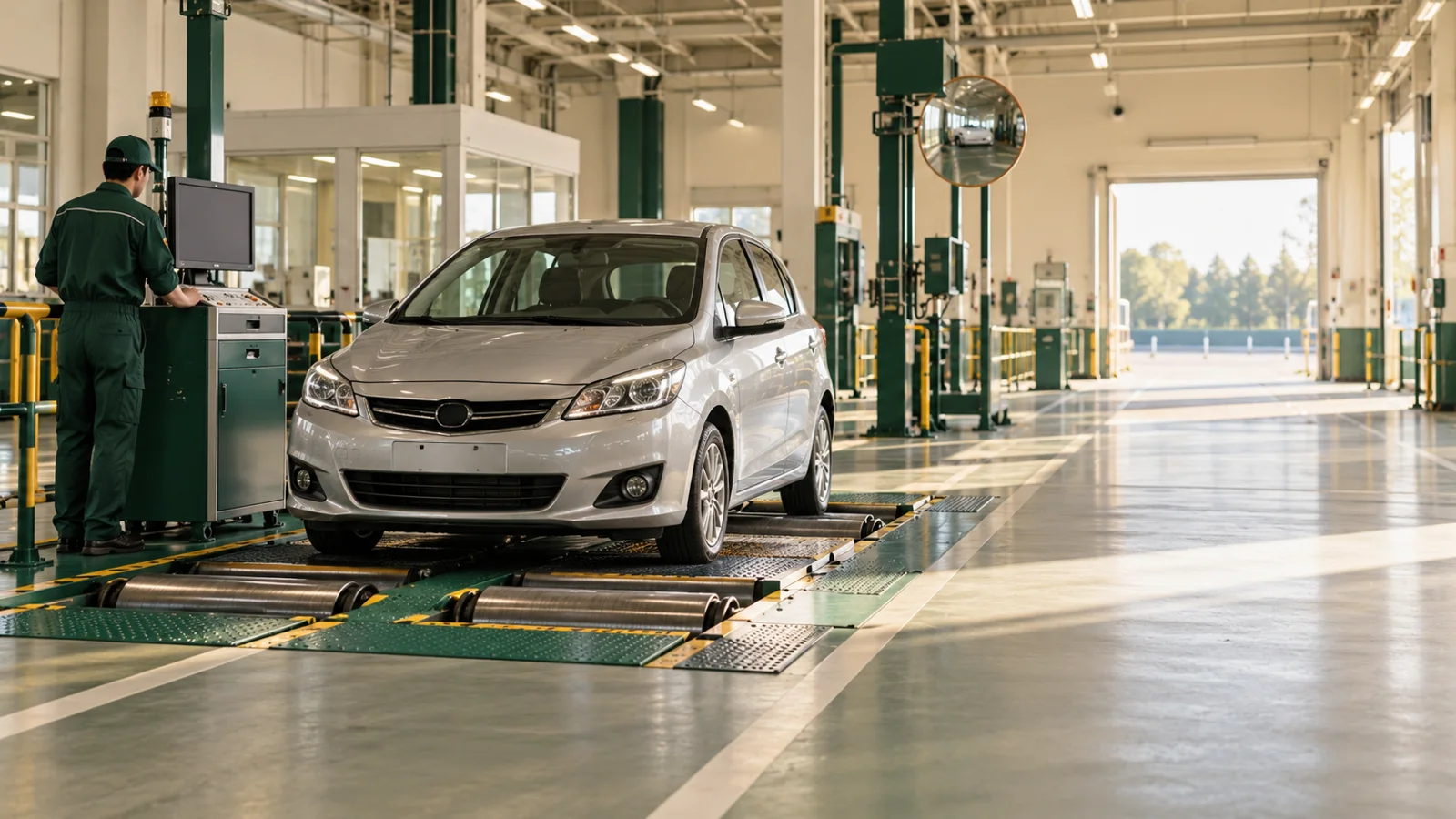
Compare self-presentation with workshop service, then plan the right registered or kei route, current documents, maintenance costs, available time and a realistic failed-inspection contingency.
General preparation guidance for private passenger cars. This is not a vehicle diagnosis, confirmed quote or available appointment.
Five checks for your next step.
Tick the items you have checked and identify the next question. Progress lasts while this page stays open and is not submitted.
0 / 5 items organized
These ticks are preparation notes, not official verification, identity checks or booking confirmation.
Related area and preparation resources
The direct answer: compare the whole task
User Shaken can be suitable when you can organize the vehicle, documents, official appointment and inspection process, and when you have a realistic plan for maintenance and any repair needed. Compare that complete task with the service offered by a workshop. Avoid deciding from the test fee alone. Statutory charges, preparation, repair work, travel, time away from other responsibilities and the possibility of a return visit all affect the practical choice. This guide does not promise that doing it yourself is always cheaper or that the car will finish in one visit.
Inspection and maintenance have different purposes. Passing the inspection is not a promise that every component has been serviced or that no fault will develop afterwards. NALTEC explains the owner-led route alongside other inspection methods and directs drivers to use a workshop for maintenance items they cannot perform themselves. You can ask a professional to inspect or repair the car without automatically handing over every administrative task, but the scope needs to be agreed clearly. Do not describe a limited pre-check as a full workshop inspection package.
車検.jp is an independent preparation site, not the official booking system or an inspection agency. Its free tools help you compare actual costs, plan from a confirmed expiry and prepare questions. They do not allocate test slots, approve documents or determine whether the vehicle meets the standards. Start by checking the current certificate and any known problems. If the inspection has expired, do not drive on public roads to a test or workshop merely because you intend to renew it. Arrange appropriate transport and confirm the applicable procedures. A useful decision is one that fits the vehicle, the time available and the responsibilities you can actually fulfill.
Source notes: NALTEC:ユーザー車検・整備工場・代行の違い ↗
Distinguish workshop service, self-presentation and agency work
Compare methods by responsibility rather than by their advertising names. A workshop service may include inspection arrangements, maintenance and administrative support within its quoted scope. Self-presentation puts the official booking and test-day process in your hands. An agency or presentation service may carry out some of those tasks without providing the same maintenance package as a workshop. NALTEC's explanation distinguishes inspection methods; use it as the starting point for asking what an actual provider includes.
For each option, write down who checks the vehicle, who performs repairs, who prepares the paperwork, who presents the car, who handles a failed item and who confirms the returned records. Ask whether extra visits or administrative work incur additional charges. A quote titled inspection agency service does not automatically answer those questions. Conversely, a workshop's higher total may include work and support missing from a bare presentation fee. Comparing the two amounts without normalizing the scope can make a sensible service look needlessly expensive or a limited service look complete when it is not.
You can also combine a professional preparation service with self-presentation, provided the responsibilities are clear. For example, a driver may ask a garage to assess a known headlight problem, approve the measured repair and then handle the official appointment personally. The garage's work does not itself prove that the later inspection will pass. Obtain the actual scope, relevant record and advice about remaining issues. The choice is not simply do everything alone or pay someone to do everything. A careful division of tasks can be useful, but only when the time, costs and unresolved responsibilities are recorded rather than left to assumptions about the word Shaken.
Source notes: NALTEC:ユーザー車検・整備工場・代行の違い ↗

Match the vehicle category to the appropriate authority
Confirm the category from the actual vehicle record. Registered vehicles and inspection-subject kei vehicles use different relevant guidance and booking routes. Do not reuse the office or document checklist from another family car simply because both cars are kept at the same address. The authority's current instructions for the vehicle and procedure take priority over a generic article, a search snippet or an old note from the previous inspection.
For the ordinary registered-vehicle route, consult the MLIT and NALTEC guidance linked in this article. For an applicable kei vehicle, use the Light Motor Vehicle Inspection Organization's continuation procedure and reservation information. If the car has been modified, its use has changed or another registration procedure is also required, ask the appropriate office what must happen before booking. NALTEC's first-time guidance notes that some modifications can require document review in advance. A standard continuation appointment should not be used as a substitute for establishing the correct procedure.
Our area pages can help you organize a location and travel plan, but a postal code cannot determine every legal or technical requirement. Japan Post's official data identifies postal geography; it does not certify which test, repair or registration process applies to your car. Use the location as one planning input. Keep the vehicle category, current expiry, intended procedure and official booking route in separate fields. If any of them is uncertain, resolve it before spending time on a detailed cost calculation. This prevents a common planning mistake: selecting a convenient nearby destination first and only discovering later that the reservation or paperwork does not match the vehicle or task you actually need to complete.
Source notes: NALTEC:初めての検査・予約可能期間 ↗ · 軽自動車検査協会:継続検査・必要資料 ↗ · 軽自動車検査協会:予約の要否 ↗
Plan dates before choosing a reservation
First establish the expiry from the current certificate record. Then separate the renewal window from the period available for making reservations. These are different planning concepts. The current NALTEC first-time page describes reservations up to fourteen office-opening days ahead, including the reservation day, and identifies days when bookings are not available. Use the current official system for the actual options. Do not assume that fourteen opening days means fourteen calendar days or that every office has the slot you want.
The free date planner organizes a confirmed expiry and a planning window; it does not query the reservation system. A calendar entry generated by the tool is not an official appointment. Check the booking confirmation yourself and retain the relevant information. For a kei vehicle, follow the applicable organization's current route instead of importing NALTEC's details into a different system. If you have an unusual procedure or vehicle condition, establish that before choosing a date that may not suit the task.
Build a timetable with preparation and contingency space. Decide when documents can be checked, when a garage can assess any known issue, when you can attend the test and when a return visit would be possible if needed. A driver with only one spare morning before expiry has a different practical risk from someone with several available dates. If the schedule is too tight, compare a confirmed workshop option rather than relying on an unverified same-day plan. Keep work, school runs and transport needs in the timetable. The purpose of planning early is not to guarantee success; it is to expose dependencies while there is still time to ask the relevant office or provider about a realistic alternative.
Source notes: NALTEC:初めての検査・予約可能期間 ↗

Build the document checklist from current instructions
Use the current document instructions for the exact category and inspection procedure. Review the original certificate, compulsory-insurance proof, tax-payment confirmation and the applicable application or inspection forms through the relevant official pages. This guide is a preparation framework, not a universal document-acceptance decision. An electronic certificate record PDF does not automatically make the original unnecessary, and an old list from a previous visit may no longer reflect the way information is checked.
Create three statuses for each item: available and checked, available but current status uncertain, or missing and needing action. That is more informative than marking every item present because a photograph exists somewhere on a phone. Where tax information can be checked electronically, recent payment or record changes may still need attention. Use the dedicated JNKS guide to prepare questions and ask the relevant authority about your situation. Do not turn the general principle of electronic confirmation into a claim that paper proof is never needed.
Check names, dates and vehicle details carefully without sharing the entire file publicly. If an original is lost, start the appropriate reissue process rather than waiting until the test morning to discover that a copy does not settle the requirement. If the address or another record is out of date, ask which procedure applies. Keep returned documents together in a wallet, and prepare any forms according to official instructions. You may find that resolving one missing record changes the earliest workable appointment. That is useful information, even if it is inconvenient: it is better to establish the dependency before taking time away from work and travelling to an inspection office with an incomplete or uncertain application.
Source notes: NALTEC:検査までの準備と流れ ↗ · 軽自動車検査協会:継続検査・必要資料 ↗
Plan maintenance separately from the inspection
NALTEC's flow distinguishes maintenance from the inspection and advises using a workshop for items you cannot perform yourself. Understand that distinction without using it to justify presenting or driving a car with an unresolved safety problem. The official explanation discusses the timing of periodic maintenance relative to the test; it does not mean that a driver should ignore known faults until a convenient later date. If a warning light, unusual braking behavior or another concern is present, ask a qualified business to assess it before relying on the car for the journey.
When arranging a preparation check, ask what is included. A visual check, a diagnosis, a measured adjustment and a complete maintenance service are different scopes. Obtain an explanation of required repair, preventive work and optional services. Agree that additional work needs your approval and confirm the tax-inclusive total where relevant. You are asking for a professional assessment of the actual car, not a guaranteed pass purchased through a pre-check label. Keep any relevant record and understand what remains to be done before the inspection.
The headlight and OBD guides can help you prepare questions about current requirements and certificate markings. They do not provide a way to bypass a test, clear an unresolved defect or substitute appearance for measurement. Avoid attempting unfamiliar mechanical work simply to reduce a quoted amount. If the car requires repair that cannot be finished before your appointment, reconsider the date and transport plan. Self-presentation can still be possible after professional work, but only when the division of responsibilities and remaining preparation are clear. A lower administrative cost does not improve the decision if it encourages a driver to omit maintenance, misunderstand a warning or arrive with an unsafe vehicle.
Source notes: NALTEC:検査までの準備と流れ ↗ · NALTEC:ユーザー車検・整備工場・代行の違い ↗

Calculate a comparable total rather than a headline fee
Build a total from current confirmed amounts. Include applicable statutory costs, inspection-related charges, professional preparation or repairs, transport and any identified additional service. Weight tax and compulsory insurance depend on the vehicle and applicable conditions, so avoid copying a single historic figure into every calculation. NALTEC's current fee page includes the April 2026 revision. Use the official table for the appropriate procedure rather than an older fee repeated in a blog or an estimate that refers to another vehicle.
Keep cash expenditure and time commitments visible separately. A driver may value a half-day away from work differently from another household, and it is better to show that assumption than hide it in an invented universal price. Include travel and the possibility of another appointment as planning items, but do not add a made-up repair amount as though it were a quote. If a fee is still unknown, mark it as unknown and ask the relevant provider. A partial total with clear gaps is more honest and useful than a precise-looking number based on guesses.
Normalize the workshop comparison. Does its quote include maintenance, inspection arrangements, document support, a loaner or handling a failed item? Which of those items are missing from your self-presentation plan? Enter only confirmed charges into the comparison tool and keep future reward points separate from the payable amount. For a hypothetical driver, the workshop package may cost more in cash but reduce several journeys and uncertain administrative tasks. For another driver, self-presentation after an agreed professional pre-check may fit comfortably into the available schedule. Neither result establishes a nationwide cheapest option. The decision depends on the same vehicle, comparable work scope, actual amounts and the time you can realistically commit.
Source notes: NALTEC:2026年4月改定後の費用案内 ↗ · 軽自動車検査協会:継続検査・必要資料 ↗
Prepare for the journey and the actual test-day process
Before travelling, confirm the reservation, reception time, destination, documents and payment instructions. Use the official first-time guide and inspection videos to understand the actual process. NALTEC's guidance covers preparation such as making the chassis marking accessible and following the relevant vehicle instructions. This article is not an operational manual for the test lane. At the facility, follow the staff and equipment instructions, and ask for clarification before attempting an unfamiliar operation.
Allow time for reception and the steps around the test, not only the minutes spent on the lane. Arriving at the edge of a reservation period with unorganized papers can make a straightforward task unnecessarily stressful. Keep the confirmation and the document wallet easy to find. Review current instructions about occupants, cargo and other preparation rather than guessing from an old video or another driver's account. If you are new to the procedure, tell the reception staff and use the assistance and guidance the facility provides within its actual arrangements.
The journey itself needs to be lawful and safe. Check the current inspection validity and any mechanical or recall-related restriction before deciding to drive. An appointment does not authorize an expired vehicle to use public roads. If transport is needed, arrange it through appropriate providers and confirm the official requirements for the situation. Do not use the guide as a reason to improvise a temporary permit or insurance arrangement. For a driver who cannot confidently operate the car in the inspection setting, comparing a workshop or presentation service may be the more practical choice. The aim is a prepared visit with clear responsibilities, not proving that every driver should complete an unfamiliar process alone.
Source notes: NALTEC:初めての検査・予約可能期間 ↗ · NALTEC:検査までの準備と流れ ↗
Make a contingency plan for a failed item
Decide in advance how you would respond if an item does not pass. The first task would be to obtain and understand the recorded finding, not to guess a repair from a brief description or buy a part immediately. Ask about the applicable same-day return or later procedure and the documents returned to you. The existing retest guide explains how to organize those questions and why a procedural deadline must be distinguished from the vehicle's current permission to use public roads.
A limited-certificate deadline does not automatically extend the original inspection validity. Do not build a plan around driving an expired vehicle for another fifteen days. Confirm the actual procedure with the relevant office, arrange appropriate repair and determine how the vehicle can be moved safely and lawfully. Registered-vehicle and kei procedures should be checked through their respective sources. The garage you contact for repair will need the recorded issue, relevant vehicle details, expiry and desired timetable to give a useful response.
Avoid assuming that a nearby business will have the part or space to repair the car immediately. Ask for availability and a quote, including any diagnostic or post-repair check needed. Reconsider the cost comparison when an additional journey, time away from work or transport arrangement becomes necessary. This is not an argument that self-presentation is always a bad decision; it is an argument for including a realistic contingency before choosing it. A driver with suitable preparation and flexible dates may handle an unexpected item comfortably. A driver relying on one narrow appointment before expiry may find a different service arrangement more practical. Keep the contingency honest by marking the unconfirmed workshop, repair time and transport as questions rather than promised resources.
Source notes: NALTEC:検査までの準備と流れ ↗

Use a suitability checklist instead of a price-only verdict
Ask whether each part of the owner-led plan is actually ready. Can you identify the correct procedure and authority? Are the current records available? Can you attend the confirmed date and allow for the surrounding work? Has the car's condition been assessed appropriately? Do you understand how to obtain help at the facility and how to handle a repair or return visit? You do not need to pretend that every answer is yes. Unresolved answers identify where professional support may be useful.
Then compare a workshop option using the same requirements. An import, electric vehicle, warning light or modification may require specific acceptance, equipment or assessment. Ask the actual branch rather than inferring capability from the chain's brand name. Past reviews and work examples can inform a shortlist, but they do not prove today's slot, parts stock or readiness for your vehicle. Confirm arrival and expected completion separately. A very short advertised operation time is not a promise that the whole process can be completed for you today.
Use the decision sheet to choose a workable division of responsibility. One driver may retain booking and presentation while using a garage for maintenance. Another may choose a workshop package because the document handling and transport fit a busy week. A third may need to resolve a registration or safety issue before either option is ready. These are different situations, not a ranking of good and bad drivers. The most useful comparison combines scope, current costs, confirmed timing and your capacity to complete the remaining tasks. If a cheaper-looking plan depends on several unverified assumptions, resolve them before accepting the apparent saving. That is a more practical route to a controlled inspection than selecting the smallest number and discovering the missing responsibilities on the day.
A worked example: limited weekday availability
This hypothetical example illustrates the comparison method; it is not a customer testimonial. A driver with a busy weekday schedule notices the statutory charges and assumes that user inspection is the obvious cheapest choice. The expiry is confirmed, but maintenance, document readiness, official appointment availability and a possible return visit have not been arranged. The driver has one morning available and needs the car again for a family journey that evening.
The driver first checks the appropriate official route and asks a garage about the car's known condition. A preparation service has a defined scope and an actual quote. The driver then compares two complete plans: self-presentation after that service, and a workshop package with its actual document, transport and timing terms. The sheet includes travel, time away from work, any required loaner and the contingency if a repair cannot be completed immediately. Neither plan is marked confirmed until the relevant business or system has actually agreed to the arrangement.
The result may favor the workshop because the schedule fits, or it may favor self-presentation if the driver's available time and preparation are sufficient. No outcome can be generalized to every car or household. What changed is the quality of the comparison: the driver stopped comparing a limited government-related cost with a broader service package as though they were identical products. The next action follows the chosen responsibilities. If using the workshop, obtain its confirmation and required documents. If presenting personally, retain the official reservation and finish the preparation checklist. If neither plan fits the current deadline, discuss transport and a realistic later arrangement instead of assuming that intent to renew permits continued driving after expiry.

Use the free tools to make the next step concrete
The free preparation pack brings together date, document and garage questions. Use the date planner with an expiry you have confirmed, and use the comparison sheet with actual quoted amounts. Neither tool requires your chassis number or a photograph of the original certificate for its basic calculation. Keep personal vehicle records under your control and share them through appropriate channels only when the relevant provider needs them for a specific task.
Turn the comparison into one next action. If the main gap is document readiness, check the official requirement or start the appropriate reissue process. If the vehicle condition is uncertain, ask a garage about assessment and repair scope. If timing is the obstacle, check the official reservation options or obtain a workshop response. If the car cannot be moved lawfully or safely, resolve transport before selecting a convenient destination. A list with these separate gaps is more actionable than a total price accompanied by a vague instruction to book now.
Registration is not required to open the pack. An optional email request is a separate choice governed by the site's current readiness and consent information. Saving such a request does not prove that a message arrived, that a garage has accepted the car or that an inspection is due. Use the immediately available material while email delivery is not ready. After choosing a method, keep the confirmed appointment, responsible party, documents and return plan together. The tools support a clearer decision, but they do not replace the official record, inspection judgment or provider's agreement. That boundary is what keeps a useful preparation worksheet from becoming a misleading promise about price, availability or success.
FAQ: user inspection decisions
Is user Shaken always cheaper?
No saving is guaranteed. Compare statutory charges, maintenance, repairs, travel, return visits and the time you can commit against a workshop's actual scope. A government-related fee alone is not a complete service comparison.
Must I perform all maintenance myself?
No. Ask a workshop about items you cannot perform and agree on the scope. Professional preparation and owner-led presentation can be separate tasks, but the remaining responsibilities need to be clear.
Does passing the test remove the need for maintenance?
No. Inspection and periodic maintenance have different roles. A pass does not establish that every component has been serviced or guarantee that the car will have no future fault.
Can I arrive without a reservation?
The official guidance requires an advance reservation for presenting the vehicle. Check the current booking method for the relevant organization, vehicle category and procedure, and keep the confirmation rather than assuming a visit time.
Do registered and kei cars use the same booking route?
Do not assume that. Match the actual vehicle category and procedure to the relevant NALTEC, MLIT or kei-organization guidance. Another household car's past booking is not sufficient evidence.
Is a saved certificate PDF enough for every procedure?
Do not treat it as a universal replacement for the original. Review current official document requirements and ask the appropriate office about the actual records and presentation method needed.
Can I drive for fifteen days after a failed test?
A retest deadline is separate from existing inspection validity. It does not automatically authorize continued road use. If inspection has expired, arrange appropriate transport and confirm the applicable official procedure.
Will the whole process finish the same day?
This guide cannot guarantee that. Vehicle condition, documents, repair needs and the official arrangement can affect completion. Plan a realistic contingency rather than relying on an advertised minimum test duration.
Can 車検.jp reserve the official test for me?
No. Its planning and comparison tools do not retrieve live slots or confirm official reservations. Use the appropriate official system or obtain the actual workshop agreement for the service you choose.
Is an email address required for the preparation sheet?
No. The immediate pack and basic tools remain available without registration. An optional email request is separate and does not establish a confirmed booking, verified vehicle or delivered message.
References and primary sources
Checked: 2026-10-04. Confirm current procedures, prices and conditions with the official source and workshop. Hypothetical amounts and scenarios are not market-price guarantees or customer results.
- NALTEC:初めての検査・予約可能期間 ↗
- NALTEC:検査までの準備と流れ ↗
- NALTEC:ユーザー車検・整備工場・代行の違い ↗
- NALTEC:2026年4月改定後の費用案内 ↗
- 軽自動車検査協会:継続検査・必要資料 ↗
- 軽自動車検査協会:予約の要否 ↗
General preparation guidance. This is not an individual vehicle assessment. See our editorial policy for sources and corrections. Editorial policy →
Turn the guide into a plan.
Organize confirmed conditions and prepare the questions for your workshop.
Open the free tool