
Compare eight booking services and workshop brands, then evaluate actual local quotes by scope, payable total, travel, rewards and confirmed timing.
General preparation guidance for private passenger cars. This is not a vehicle diagnosis, confirmed quote or available appointment.
Start by defining what you are comparing
Searching for shaken brings together three different things: a booking marketplace, a national workshop brand, and an individual local business. A useful comparison starts by separating them. The website may help you discover a shop, but a particular branch still needs to identify your vehicle, inspect its condition, explain the work, and confirm when it can finish. A familiar brand name cannot answer all of those questions on its own. Write down the booking channel and the actual workshop as separate entries in your notes.
This is an editorial planning guide based on official public information, not an account of mystery shopping or personally completed inspections. 車検.jp does not operate the providers described here and does not have their live appointment inventory. Our purpose is to help you compare the choices you can actually confirm. Begin with your certificate expiration date, vehicle details, available days, and travel limit. These four facts turn an open-ended search into a manageable decision. They also prevent a low advertised price from distracting you from a provider that cannot inspect your vehicle before your real deadline.
Prepare one brief for three workshops
Create a single brief before contacting anyone. Include the make, model, model code where available, first registration information, mileage, expiration date, and any symptoms you have noticed. Add the dates when you can leave the car and the latest practical collection time. If you need a replacement vehicle, say so at this stage. A workshop should not have to discover that requirement after you have already chosen it for a price that assumes you will wait on site.
Keep the brief consistent across your shortlist. Otherwise, one shop may quote a basic inspection while another includes the warning-light investigation you mentioned only on the second call. Ask which document details are necessary before sending a complete certificate image, and use the provider’s own secure channel. Do not place registration documents in public review comments. Finally, choose one priority: lowest confirmed payable amount, shortest practical journey, or earliest confirmed completion. You can consider all three, but naming the priority makes trade-offs clearer when no candidate is best at everything. Save the responses with dates so you know which information still needs reconfirmation.
Rakuten Car: confirm the appointment before valuing rewards
Rakuten Car Shaken lets drivers search for workshops and apply for a free estimate. Its published process says the estimate appointment is completed when the visit date and time are confirmed. That is the key practical distinction: finding a listing or sending an application is not the same as receiving a confirmed inspection completion slot. Check the actual branch and appointment response before changing your work or family schedule.
Treat rewards as a separate part of the decision. Read the current campaign conditions, including the booking route and relevant dates, rather than copying a maximum points headline into your budget. In your own comparison sheet, record the amount payable to the workshop first. Then create a second field for potential points, their conditions, and anything still uncertain. This prevents a reward you may not qualify for from looking like a cash discount already applied to the invoice. If a household member makes the booking, confirm whose account and vehicle information must meet the campaign rules. Link back to the official offer when you save your notes.
Source notes: 楽天Car車検:サービスと申し込みの流れ ↗

EPARK: identify exactly what the discount covers
EPARK Shaken provides a way to find inspection options by area and compare advertised conditions. When you see a discount percentage, identify the item to which it applies. A reduction in the basic inspection fee should not be interpreted as the same percentage off the complete bill. Your own worksheet should preserve the distinction between the advertised fee, statutory charges, and work added after the vehicle is examined.
The practical next step is to ask the selected branch for a total under your vehicle’s conditions. Also ask how a requested visit becomes confirmed and which communication channel the branch will use. A shop appearing close to your postal code is a useful lead for research, but it is not evidence that the date you need is available. Keep a record of the offer you saw and when you saw it, then confirm whether it applies to your vehicle and booking route. If two providers express offers differently, translate both into the same comparison format before deciding which is better for you.
Source notes: EPARK車検:公式予約・特典案内 ↗
Goo-net Pit: match the workshop to the work
Goo-net Pit is another starting point for finding workshops and discussing inspection or maintenance work. The useful question is whether a particular business can handle your particular job. A broad listing category is less informative than a clear response about the model, symptom, equipment, and timetable involved. If the car has a recurring fault, include that in the initial inquiry instead of booking a routine inspection and hoping the workshop can accommodate the extra investigation on arrival.
For your own shortlist, separate the cost of diagnosis from the price of the eventual repair. Ask whether a diagnostic charge remains payable if you decide not to authorize the work. Where reviews are available, look for descriptions of communication, estimates, and handover rather than treating the overall rating as a guarantee of future workmanship. A recent, detailed account involving a comparable service can help you formulate questions, but it does not replace a current conversation with the workshop. Record the name of the branch you contact so that evidence about one location is not accidentally applied to a different business.
Source notes: グーネットピット:車検・点検・診断 ↗
Autobacs and YellowHat: include aftercare in the comparison
Autobacs and YellowHat may be convenient candidates when you want an inspection conversation alongside familiar maintenance services. Their official inspection pages describe service and aftercare arrangements, but the scope and conditions need to be checked with the branch. Ask which tasks are covered, whether parts or fluids are separate, where the benefit can be used, and when it expires. An aftercare benefit is not a promise that every later repair will be free.
For a useful household comparison, place today’s payable amount in one column and future service benefits in another. Then ask whether you are likely to use those benefits. A nearby branch with hours that fit your routine may be more practical than a distant location with an attractive benefit you cannot realistically redeem. Conversely, convenience alone does not tell you whether a specific model or repair can be handled. Confirm both. Keep the written conditions with the inspection paperwork rather than relying on a general memory that the package included maintenance. That record is particularly helpful if someone else in the household returns to the shop later.
Source notes: オートバックス:車検サービス ↗ · イエローハット:車検サービス ↗
Kobac, Holiday and Hayataro: understand the timing claim
Kobac publishes different inspection menus, while Holiday and Hayataro describe approaches that include customer explanations during the process. Their published service formats are useful starting points, but a short advertised duration is not a universal completion promise for every vehicle. Confirm the selected menu, the need for an appointment, and what happens if the inspection reveals work that cannot be completed immediately.
Build your schedule around the time the vehicle can actually be returned for use. That includes reception, discussion, repair authorization, payment, and any relevant paperwork. For your own planning, distinguish three statements: the branch can speak to you today, it can accept the car today, and it can complete the required work today. Those are different commitments. If the deadline is close, ask the branch to explain which one it is offering. Record the answer and the time it was confirmed. A short service format can be valuable, but it should fit the condition of the car rather than encourage you to leave a known symptom out of the booking conversation.
Source notes: コバック:車検コース ↗ · ホリデー車検:公式予約案内 ↗ · 車検の速太郎:公式サービス案内 ↗
When the same workshop appears on several websites
You may encounter the same physical workshop through several booking routes. Match the address as well as the name before counting those listings as separate alternatives. In your comparison, keep one row for the workshop and note the different booking channels underneath it. This prevents a shortlist of three websites from turning out to be only one actual service location.
Do not assume that offers from different channels can be combined. Check the conditions and ask the workshop how an existing estimate request affects eligibility before changing routes. Avoid making overlapping appointments simply to hold several prices while you decide. A cleaner approach is to request clarification first, choose one route, and cancel any unwanted appointment through the required process. Keep the cancellation confirmation. This is especially useful when a family member originally booked the visit and another person later discovers a different campaign. The decision should be based on a valid offer and an available appointment, not on the hope that a branch will combine incompatible terms after the work has already started.

Translate “cheap” into a comparable payable total
Use a simple structure for every quote: statutory charges, inspection or service fees, additional work, other charges, and confirmed cash discounts. Leave unknown items marked as unknown. Entering zero where you have no answer creates a misleading total and can make the least complete quote appear to be the best deal. The missing information should become a question for the workshop.
Consider an illustrative example, not a market-price claim. Workshop A quotes ¥58,000 including a particular required task. Workshop B quotes ¥54,000 but charges another ¥7,000 for that same task. On an equivalent scope, B becomes ¥61,000. The exercise is not about favoring either shop; it shows why the work description matters as much as the headline. Use the free quote tools to reproduce the arithmetic with figures the garages have actually supplied. Keep possible reward points outside the payable total, and check whether tax is already included before adding it yourself. A transparent comparison is one that another household member could read and understand without needing your memory of the phone call.
Compare the whole journey, not just distance
A nearby workshop is not necessarily the easiest one to use. Think through the journey after you leave the car as well as the drive to the branch. You may need to walk to a station, arrange a lift, collect a loaner, or return during hours that overlap with work. Write down both the handover journey and the collection journey. This often reveals practical differences that a straight-line distance cannot show.
If a loaner is important, ask about reservation, price, fuel, insurance conditions, return time, and who may drive it. Discuss child seats or other essential requirements before arrival. For your own decision, you can estimate the value of time or extra transport, but label those figures as household assumptions rather than garage charges. A slightly higher quote may be easier to manage if it avoids a second day away from work. The opposite may be true if you have flexible transport. There is no universal answer: the purpose of the worksheet is to make your own constraints visible instead of hiding them behind a single price ranking.
Handle urgent requests without confusing urgency with availability
For an urgent request, state the actual deadline at the beginning of the conversation. Ask when the vehicle must arrive, when it can be examined, and what could prevent completion on the requested day. Parts availability and additional diagnosis can change the plan after the car is seen. Agree on how the workshop will contact you if that happens and who is authorized to approve a change.
If the inspection has already expired or a symptom raises doubts about safe driving, address transportation before shopping for the lowest price. A comparison page cannot establish that your vehicle may legally or safely be driven to a garage. Use the relevant expiry guidance and speak with the workshop or roadside assistance provider about the situation. For ordinary deadline pressure, the best practical response is often a short, accurate brief sent to a small number of suitable branches. Repeatedly sending incomplete urgent messages to many businesses can create more confusion than useful options. Keep a record of confirmed responses and update the others promptly when you make a decision.
Read reviews for useful questions, not certainty
Reviews can help you decide what to ask, but they cannot guarantee your own outcome. Look for concrete descriptions of how the estimate was explained, how additional work was authorized, and how changes to the timetable were communicated. Check whether the review concerns the same branch and a comparable service. A short comment about buying an accessory is not strong evidence about a complex inspection repair.
When you encounter a complaint, turn the concern into a neutral question rather than repeating an unverified allegation. For example, ask how the shop obtains approval for extra charges and whether it provides an itemized estimate before work begins. The answer is directly relevant to your booking. Similarly, a positive review about friendly staff does not tell you whether your particular imported vehicle can be serviced. Keep both praise and criticism in proportion. This guide does not invent customer testimonials, star ratings, or claims of personal experience. The most useful evidence for your decision is a current, specific response about the vehicle and service you are actually requesting.
Save a concise confirmation after booking
Once you choose a branch, save one concise confirmation containing its name and address, arrival time, expected collection time, agreed scope, confirmed price components, required documents, and the procedure for changes. State clearly whether this is an estimate appointment or a booking for the actual inspection work. If another family member will deliver the vehicle, share the same record with them.
For a telephone booking, write down your understanding immediately and ask about any unresolved point. You do not need a long transcript; a short, accurate summary is more useful. Keep the estimate and the applicable offer conditions together so you can compare them with the final invoice. If your plans change, contact the branch promptly and check its cancellation terms rather than assuming every channel follows the same policy. This small administrative step protects your own schedule and makes communication easier for the workshop. It also gives you a clear place to record a revised completion time if the vehicle examination uncovers work that was not included in the preliminary estimate.
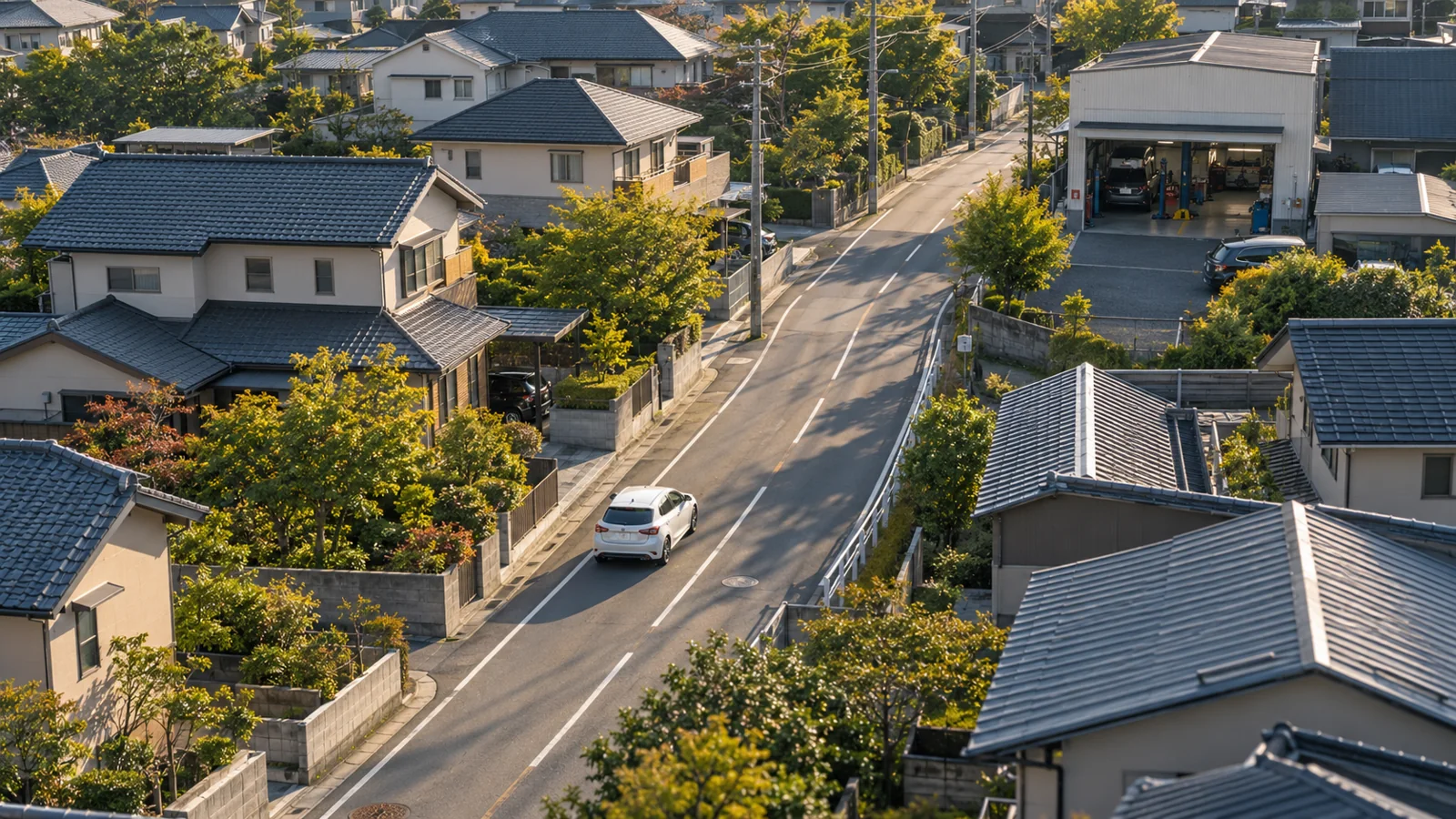
Three illustrative ways to choose
Imagine three households facing the same inspection month. The first has flexible transport and wants the lowest confirmed payable amount. Its best next step is to obtain equivalent itemized quotes and resolve the missing charges before ranking them. The second needs the car back for work on a particular morning. It should prioritize a realistic confirmed completion plan, including what happens if parts are unavailable. The third depends on a vehicle for school travel and needs an appropriate loaner. Loaner conditions may decide its shortlist before price becomes the final comparison.
These are illustrative decision patterns, not customer case studies or claims about provider performance. They show why one national winner is not a helpful answer for every driver. A nearby branch with a slightly higher bill can be a rational choice when it saves multiple difficult journeys. A driver with spare time may reasonably choose a more distant workshop after comparing equivalent work. Use the free tools to make those differences explicit, then check the final facts with the branch. The objective is a decision you can explain, not a ranking that looks precise while ignoring your circumstances.
A ten-minute check before you finish comparing
Before you finish, spend ten minutes checking only the unanswered items. Can the branch handle the vehicle? Is the payable total complete enough to compare? How will additional work be approved? Are the appointment and collection expectations clear? Have you checked loaner arrangements, offer conditions, documents, and the procedure for changes? If the important questions are answered, you do not need to restart the whole search every time a new advertisement appears.
Enter only figures and dates you have confirmed into 車検.jp’s three-garage comparison tool. The resulting order reflects your inputs; it is not a certification of a garage’s technical skill, safety, or future performance. Save the preparation kit if you want a written record, and use the estimate form to organize your preferences where appropriate. Read the form’s current service-status notice: an intake submission is not a confirmed garage booking. This final distinction matters because good comparison work should lead to a clear next action. It should not leave you believing an appointment exists when you have only saved a plan or submitted an initial request.
A worked worksheet with honest unknowns
Suppose you receive three replies. Workshop A provides a tax-inclusive total with a list of tasks. Workshop B sends only its basic fee. Workshop C gives an approximate range and says it will confirm the work after seeing the car. Sorting those three numbers immediately would reward the least complete response. Instead, mark A’s scope as supplied, B’s additional components as unanswered, and C’s final amount as pending a vehicle examination. This is a more useful picture even though it contains fewer apparently precise numbers.
Now create a short follow-up for each branch. Ask A whether the stated total includes all work already identified. Ask B for the missing statutory and service components. Ask C when the examination can happen and what the estimate appointment itself costs, if anything. Set a reasonable personal decision deadline that leaves time before your inspection expires. When that deadline arrives, compare the confirmed alternatives you have rather than treating silence as a low quote. Keep assumptions visually separate from supplied figures. If you later learn a missing charge, update the worksheet and the date together. The record should show what you knew when you made the decision, not a polished retrospective version that hides uncertainty.
Use collection day to improve your next comparison
The comparison does not have to end when you click a booking button. At collection, match the invoice to the work you authorized and ask about any items that were discussed but deferred. Record the follow-up advice in a way you can use: the item, why it matters, and when the workshop suggests checking it again. Do not interpret a completed inspection as a guarantee that every future fault has been prevented. If the original symptom remains, describe it to the workshop before assuming the service addressed it.
Keep a few practical notes for the next inspection cycle. Was the estimate understandable? Did the branch contact you before changing the work? Was the collection process compatible with your schedule? These observations are more useful to your household than a vague memory that one shop was cheap. Distinguish your personal impression from a checkable fact such as an appointment time or invoice amount. Save sensitive documents privately. If you choose to leave a public review, describe your actual experience accurately and avoid publishing staff or customer personal information. Your next comparison can then begin with a reliable record of what mattered to you, while still checking current prices and conditions instead of assuming they will remain unchanged.
What to do when a request has no reply
If an estimate request receives no reply, check the acknowledgement first. It may state the expected contact method, business hours, or a reference number. Use the provider’s official contact details to ask about the request, giving the submission date and a brief description. Silence does not establish either a confirmed appointment or a refusal. Keep the status marked as awaiting confirmation until you have a clear answer.
When the expiration date is close, decide how long you can reasonably wait before pursuing another suitable option. Explain the real deadline to the next branch rather than assuming that an urgent message creates priority. If several inquiries remain open, organize them once one appointment is confirmed. Record which requests were inquiries only and which became actual bookings, then follow the cancellation process for any booking you no longer need.
Checking a spam folder can be sensible, but it should not lead you to trust an unexpected payment or document-upload link. Verify doubtful messages through the branch’s established channel. A legitimate comparison process should leave you knowing whom you contacted, what response you received, and what still needs to happen. This small amount of record keeping is especially helpful when different household members use different email accounts. It prevents an appointment response from being overlooked and avoids mistaking a marketing message for a confirmation of the work you actually requested.
FAQ: booking routes and benefits
Which is cheaper, Rakuten Car or EPARK?
There is no reliable nationwide answer for every vehicle. Compare the actual branch, equivalent work, and the offers for which you qualify. Keep potential reward points separate from cash discounts already included in the quote.
Should I switch to direct booking if I find the same shop?
Only after checking the terms. Changing the booking route may affect an offer or an existing appointment. Ask the workshop how to handle the current request before creating another one.
Does submitting an estimate request complete my inspection booking?
Do not assume so. A successful form submission and a confirmed appointment are different events. Check who will contact you, by which method, and what the confirmation covers.
Does a large number of reviews prove a branch is right for me?
Review quantity alone cannot establish that. Use specific, relevant descriptions to prepare questions, then confirm the vehicle support, work scope, timetable, and costs directly.
FAQ: price, timing and using this guide
Can I rely on a shortest advertised duration for collection?
Ask about the actual menu and vehicle condition. Reception, additional work, and paperwork can affect the full visit. Obtain a realistic collection expectation rather than interpreting the headline as a universal guarantee.
How many workshops should I contact?
This guide uses three because that is a manageable planning example, not because three is a statistically proven optimum. The right number depends on your area, deadline, and how complete the responses are.
Will 車検.jp book one of these providers for me?
The site currently provides information and preparation tools. Confirm real appointments and availability through the provider’s official channel and the selected branch. Any request form should be read together with its current service-status notice.
Is the order of providers an endorsement ranking?
No. The order does not establish the cheapest or best choice for everyone. Use your own confirmed requirements, check the source links, and compare the particular workshops you could realistically visit.
References and primary sources
Checked: 2026-09-28. Confirm current procedures, prices and conditions with the official source and workshop. Hypothetical amounts and scenarios are not market-price guarantees or customer results.
- 楽天Car車検:サービスと申し込みの流れ ↗
- EPARK車検:公式予約・特典案内 ↗
- グーネットピット:車検・点検・診断 ↗
- オートバックス:車検サービス ↗
- イエローハット:車検サービス ↗
- コバック:車検コース ↗
- ホリデー車検:公式予約案内 ↗
- 車検の速太郎:公式サービス案内 ↗
- 国土交通省:認証工場と指定工場 ↗
AI-assisted editorial content, not an individual vehicle assessment by a mechanic. See our editorial policy for sourcing and corrections. Editorial policy →
Turn the guide into a plan.
Organize confirmed conditions and prepare the questions for your workshop.
Open the free tool