
Distinguish traction and auxiliary batteries, inspection and health reports, package exclusions and OBD eligibility. Prepare workshop, charging, warranty and additional-repair questions.
General preparation guidance for private passenger cars. This is not a vehicle diagnosis, confirmed quote or available appointment.
Five checks for your next step.
Tick the items you have checked and identify the next question. Progress lasts while this page stays open and is not submitted.
0 / 5 items organized
These ticks are preparation notes, not official verification, identity checks or booking confirmation.
Related area and preparation resources
Start by separating inspection from maintenance
For a hybrid or electric passenger car, begin a Shaken estimate by identifying the current certificate expiry, vehicle specification and work you are asking the provider to assess. An electric powertrain does not turn every maintenance question into a battery question. Nor does the absence of an engine establish that inspection is free, that all workshop charges disappear, or that a general advertised price applies to your car.
Separate the proposal into statutory charges, workshop inspection and service charges, additional repairs, and optional maintenance or diagnostic services. Ask what has been assessed, what remains provisional, and which items require your approval. This structure makes comparisons easier across a dealer, an independent garage and a booking platform without treating their package names as identical work scopes.
This guide is intended for preparation and quote discussion. It does not give instructions for working on high-voltage equipment or diagnose a particular vehicle. The planning examples are original hypothetical cases, not customer stories or completed inspections. If the car has a warning or a condition that affects safety, follow its owner manual and obtain suitable assistance before concentrating on a discount. A valid certificate, a charged traction battery and a successful email confirmation each answer a different question; none should be used as a substitute for assessing the actual vehicle.
Source notes: 日産:点検の内容 ↗
Identify the exact vehicle before requesting a price
A model name alone may not identify the car sufficiently for a useful quotation. Record the year, relevant variant, propulsion type, mileage and known equipment. A hybrid, plug-in hybrid and battery-electric vehicle may require different information even when the body style looks similar. Ask the workshop which certificate details it needs to establish the vehicle specification; do not guess a field because a web form expects an answer.
Provide the current expiry and the purpose of the inquiry. You may want inspection planning only, an assessment of a symptom, an explanation of a maintenance package, or a second opinion on a previous estimate. Those requests are related but not interchangeable. If a workshop prices a routine inspection while you expect battery-health analysis, the misunderstanding is in the scope rather than necessarily in the arithmetic.
Use a consistent short vehicle brief when contacting more than one provider. It can include mileage, recent servicing and the observations that prompted the inquiry. Keep full documents and identifiers for the provider's appropriate official channel when necessary. Do not publish a complete certificate in a public review or comment. Good identification reduces avoidable revisions to a quote, but it does not eliminate the need to examine the car. Record when a price remains subject to inspection of the actual vehicle instead of presenting the first number as a final bill.

Distinguish the traction battery from the auxiliary battery
If an estimate contains the word battery, ask which battery and which task the provider means. A traction battery, an auxiliary battery, an assessment and a replacement proposal are not the same item. A useful answer identifies the component, the finding, the proposed work and the reason. That prevents a conversation about an auxiliary battery from being interpreted as a confirmed need to replace the traction battery.
Do not treat this distinction as a do-it-yourself procedure. Nissan's EV handling guidance warns users not to touch high-voltage cables, connectors or components. Consult the manual for your exact vehicle and obtain qualified assistance. A general image of a workshop or a battery in an article cannot show you that equipment is isolated or that it is safe to handle. This website does not provide a disconnection, testing or reset sequence.
In your comparison table, write the provider's full item name rather than shortening all battery-related entries to one category. Ask whether an assessment charge is included in the inspection package or separately payable. If replacement is proposed, request the evidence and the applicable part specification before authorization. A limited budget does not establish that continued use is safe, while an alarming generic label does not establish that the most expensive component has failed. The appropriate next step is a vehicle-specific explanation with a clearly bounded authorization.
Source notes: 日産:リーフ取扱説明書・高電圧の注意 ↗

Battery-health information is not an inspection result
A battery-health report and a Shaken result serve different purposes. Ask what a proposed battery check measures, which report you receive, and who can explain it for your vehicle. Do not convert a range display, a battery-related reading or a workshop package label into a certificate that every part of the vehicle meets inspection requirements.
If you have an earlier report, bring it into the discussion without assuming that every new number can be compared directly. Ask about the method and conditions behind the information. A provider may need to distinguish a fault diagnosis from a capacity-related assessment or an explanation of how the vehicle has been used. Write down the actual description instead of putting all reports under the word healthy.
Avoid using a general article to determine a universal battery replacement threshold or warranty outcome. Those decisions depend on the vehicle, findings and relevant contract. Ask the responsible manufacturer, dealer or other provider what the information means and what follow-up is recommended. At the same time, continue preparing the ordinary inspection items and paperwork. Battery information does not tell you whether a tire is damaged, a light is working, or the latest certificate record has been updated. A complete preparation plan preserves those separate checks so an interesting diagnostic result does not distract from a necessary next action.
Source notes: 日産:EVのメンテナンス・保証案内 ↗
Clarify the hybrid-specific scope without assuming a special surcharge
For a hybrid vehicle, ask the provider to explain the routine inspection scope and any vehicle-specific assessment separately. Do not assume that the presence of both an engine and electrical equipment proves that every estimate must carry the same surcharge. Equally, do not assume that one provider's simple package includes all the work a different provider lists individually.
Describe use and service history accurately. A car used for short local trips, a car with high annual mileage and a car with an unresolved warning may produce different discussions, but their actual needs must be assessed. Do not invent symptoms to obtain a more detailed quote, or leave out a warning because it might increase the preliminary price. Comparable inputs are essential when asking a second provider to explain an expensive proposal.
If a hybrid-specific diagnostic service is offered, ask its purpose, charge, included report and relationship to the proposed maintenance. The answer should tell you what the service adds, not merely repeat that special equipment is involved. Request an explanation of any finding that leads to parts replacement. You can compare the quality and completeness of those explanations without declaring that a different chain name automatically makes the work better or worse. The useful output is a vehicle-specific list of confirmed needs, optional work and unresolved questions, with any future cost estimates clearly identified as uncertain.
Read the exclusions in an EV inspection package
Nissan's published EV maintenance-pack information provides a useful example of why a package title is not the complete payable bill. Its description separates included inspection-related work from statutory costs and condition-dependent additional maintenance. It also states that product availability and pricing are determined by the selling company, and that collection or delivery may carry separate charges. These are that provider's conditions, not a universal rule for every EV package.
For your own agreement, ask what is currently included, whether the relevant service is still within the agreement period, and which branch can provide it. Record the package benefit beside the corresponding quote item so you do not count an already included service twice. Conversely, do not omit an excluded charge merely because the package contains the word inspection.
Check how additional work is proposed and approved. A prepaid or existing maintenance arrangement does not mean that every future part or diagnosis is covered. Ask what happens if you change the visit, use another branch or decide not to proceed with an additional proposal. Keep the actual agreement and its current provider explanation together. That lets you compare a package-based quote with a standalone quote fairly, without manufacturing a discount or assuming that a provider's advertised bundle is an entitlement you already hold.
Source notes: 日産:EVメンテプロパックの内容・除外費用 ↗
Keep ordinary vehicle condition in the preparation plan
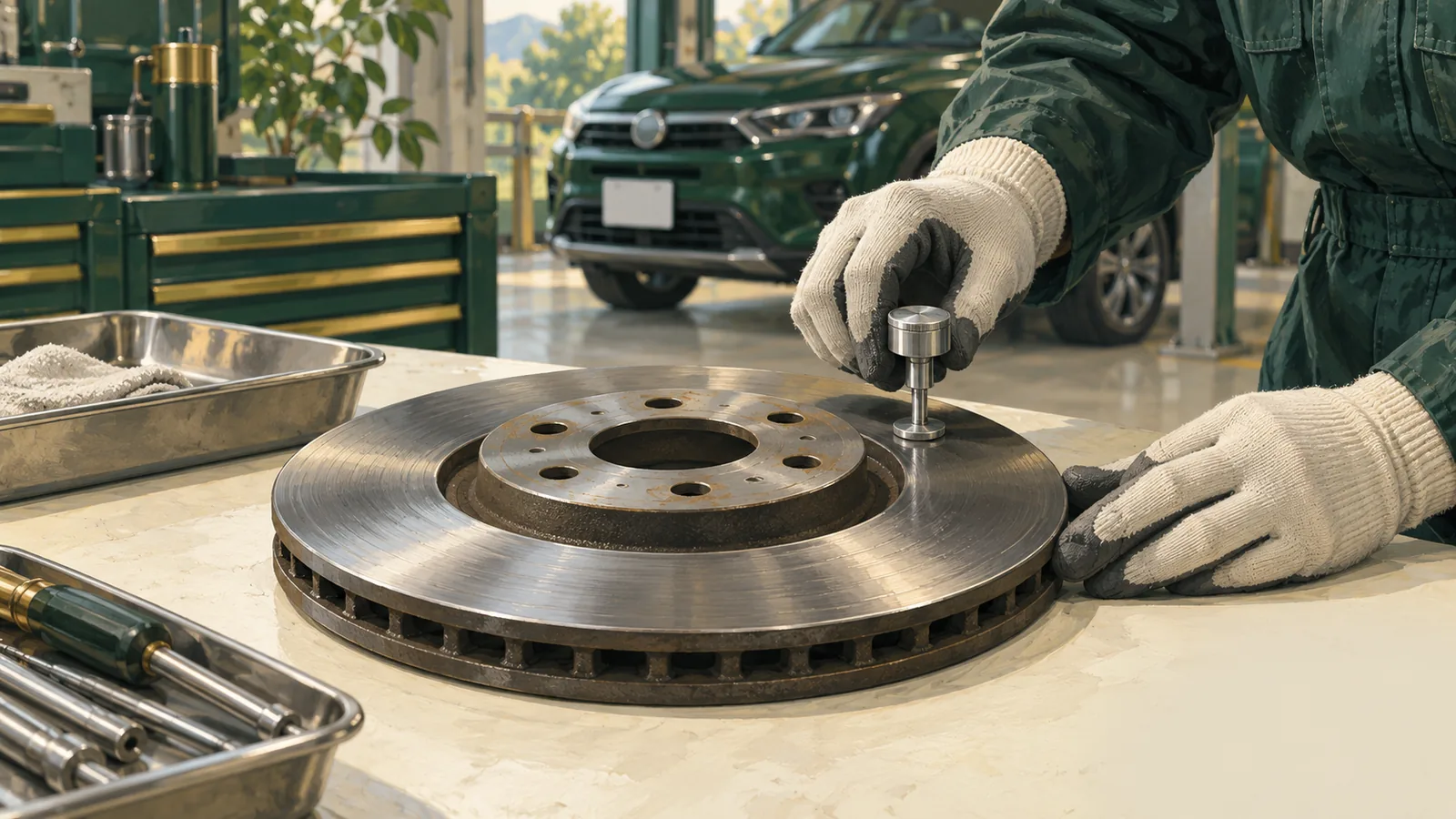
Do not let a battery-centered discussion erase the rest of the vehicle. Nissan's published inspection information covers ordinary vehicle systems alongside EV-specific checks. Tires, brakes, lights and other equipment still deserve appropriate attention. Regenerative braking is not a reason to decide that mechanical brake condition never needs assessment, and a low running-noise level is not evidence that all mechanical parts are sound.
Record the observations you have actually made: a new noise, vibration, unusual tire condition or a light that does not work. Avoid assigning a diagnosis yourself. A clear symptom description helps the provider decide what must be assessed and whether the requested visit is suitable. If a symptom raises an immediate safety concern, consult the vehicle's official guidance and obtain assistance rather than waiting simply because the certificate remains current.
When reviewing an estimate, ask how a proposed part replacement relates to the findings. Distinguish work addressing a present condition from preventive maintenance and optional services. None of those categories automatically means unnecessary. The right decision depends on what was found and how you intend to use the car. Ask for the explanation, expected follow-up and any relevant records. This keeps quote comparison anchored to the condition of the actual vehicle rather than to a generic belief that EVs need almost no maintenance or that hybrids always need every conventional service.
Source notes: 日産:点検の内容 ↗
Check OBD eligibility from the applicable vehicle information
Do not determine OBD inspection eligibility solely from the labels hybrid or EV. Use the official OBD information and the relevant vehicle details, and ask the workshop to confirm what applies. The NALTEC OBD portal explains the system and its applicable vehicles. A general fault diagnosis, an applicable OBD inspection and a manufacturer battery-use assessment should not be treated as identical services merely because each uses electronic information.
If an estimate has several diagnostic lines, ask what each covers and whether there is overlap. The aim is to understand the work, not to remove every line containing the word diagnosis. A provider may have good reasons to distinguish an inspection requirement from an additional investigation of a symptom. Record the findings and scope instead of using a package name as proof that every electronic check has already been performed.
Do not clear a warning or manipulate a component to make a display look normal before examination. Explain when the warning appeared, what the car was doing, and any recent work. Follow the owner's manual when deciding whether to stop or seek assistance. A warning disappearing later does not by itself prove that a cause has been repaired. The useful comparison question is how each provider proposes to investigate the actual issue, what approval is needed, and what record will explain the completed work afterward.
Source notes: NALTEC:OBD検査の概要・対象 ↗
Keep statutory costs vehicle-specific
Statutory charges must be checked for the actual vehicle and applicable conditions. Do not set every tax or compulsory-insurance item to zero merely because the car has an electric powertrain. Ask the provider to show the vehicle category, relevant period and assumptions beside the charges. A past receipt may be useful context, but it does not establish that the same treatment applies unchanged at the next inspection.
Separate a confirmed statutory amount from a planning estimate in your comparison. If an exemption or reduction has not been established for the vehicle, record it as a question. Do not use a generic calculator output as the final answer to a vehicle-specific eligibility issue. The cost tools on 車検.jp help organize assumptions and compare scopes; they are not an official tax determination or a confirmed garage quotation.
Use the same approach for payment. Ask which charges the branch accepts by which method and when payment is due. A chain-level article may describe a general practice while a branch has its own applicable arrangement. If a reward or discount is offered, distinguish a reduction in the bill from a benefit awarded later under separate conditions. The point of this section is to make the financial inputs explicit. It is not advice to take a particular credit product or a claim that owning an EV guarantees the lowest inspection expense.
Ask what the chosen workshop can actually handle
An EV-compatible or hybrid-compatible label is a starting point for an inquiry, not a guarantee that the workshop handles every variant and every repair. Give the actual vehicle details and ask which requested tasks it can perform. If another provider is involved for a specialized assessment or repair, ask how that work is arranged, who authorizes it, and which business explains the result.
This matters particularly when comparing a booking platform with a garage. The platform may help discover or request a service, while the workshop examines the vehicle and carries out the work. Identify who sets the estimate, who confirms the appointment and who answers a technical question. Do not assume that registration with a platform is a manufacturer approval or that a search result establishes a garage's current equipment and availability.
Write down the responsibility chain in simple terms. For example, the selected garage performs the preliminary examination and proposes specialist work only after explaining the finding. If that is the agreed arrangement, record the additional charge and any effect on return timing. A different arrangement may also be suitable, but it should be explicit. 車検.jp does not certify, endorse or promise an appointment with a business through this article. The goal is to help you establish actual capability before sharing unnecessary information or relying on a service that has not been confirmed for your car.
Coordinate arrival, charge-related instructions and collection
Ask the workshop for its arrival instructions for the actual vehicle, including any charge-related preparation and items it wants you to bring. This guide does not prescribe one battery percentage for every EV or plug-in hybrid. Follow the applicable owner manual and provider instructions. Prepare the keys, relevant records and any existing maintenance-pack identification without assuming that every branch expects the same handover.
Discuss collection separately. Do not assume that a workshop has charging equipment, that charging is included without charge, or that the vehicle will be returned in a particular state. Ask what the service arrangement actually provides and how you should plan the journey after collection. If a loaner is required, confirm its availability and conditions, including any requirements unfamiliar to the intended driver.
Inspection expiry and vehicle safety remain independent movement constraints. If ordinary public-road driving is not appropriate, discuss suitable transport instead of relying on the fact that the vehicle can still power on. Keep arrival time, examination time, completion expectation and collection time as separate notes. A provider can offer a quick task yet still require a longer overall stay for other work or scheduling. Preparing those details reduces the chance that a useful technical assessment becomes inconvenient because the family had no practical return journey or the wrong expectation about charging and collection.
Compare two proposals without turning unknowns into zero
Build your comparison around the same vehicle brief and requested outcome. List the inspection scope, diagnostic services, statutory charges, additional repairs, loaner conditions, payment and unanswered questions. Note whether the provider has examined the car. A detailed quote after assessment should not be compared as though it has exactly the same certainty as a quick online starting figure.
Imagine a hypothetical proposal A that separately prices a battery-related assessment and proposal B that includes a diagnostic label within a package. Before comparing their totals, ask whether those services serve the same purpose and produce the same useful information. If they do not, retain the difference. It may be entirely reasonable to choose either arrangement, but the decision should be based on the service needed rather than the assumption that the smaller visible number buys an identical result.
Unknown charges are not zero charges. Mark them unconfirmed and identify the next question. Avoid inventing a saving by deducting a future reward, an unapproved discount or an assumed tax treatment. The quote-comparison tool can hold the information you have actually checked, while the quote checklist helps prepare missing questions. Neither tool is a live supplier quotation feed or an automatic recommendation that a particular provider is cheapest. Once the material conditions are answered, keep the chosen quote and supporting replies together for reception and eventual collection.

Two hypothetical ownership situations
Consider a first-inspection owner with a maintenance package purchased alongside the car. The useful first step is to locate the agreement and ask the provider what applies at this visit. The owner supplies service records and actual observations, then requests a vehicle-specific proposal. Newer ownership does not justify promising that no additional work will be found, and an existing package does not establish that every charge is included.
Now consider a used-car buyer who has inherited some service records and an old battery report. This owner asks which records are current, whether any agreement or warranty applies to the new ownership situation, and what the selected workshop needs to assess. The old report helps explain the history but is not presented as a new examination. Missing information remains missing until the appropriate provider confirms it.
Both examples are hypothetical. They demonstrate different preparation priorities, not evidence of customer results. In the first, preventing double-counting of included services is especially useful. In the second, identifying gaps in the history and contract information is especially useful. Each owner still checks certificate expiry, ordinary vehicle condition, appointment arrangements and payment. A useful website should help make those differences visible instead of sending every electric-car user through one identical battery replacement funnel or implying that an email address confirms ownership and eligibility for an offer.
Separate warranty inquiries from repair authorization
Warranty eligibility and repair authorization are separate decisions. Ask the relevant provider which agreement applies, what information it needs, and whether a diagnosis is preliminary or a formal part of the claim process. Do not treat booking a battery check as approval for a warranty repair. Likewise, a workshop finding should not be transformed into a universal statement that a particular model always qualifies for replacement.
Before additional work begins, ask for the findings, proposed scope, charge and effect on the schedule. Agree how the provider will contact you if the estimate changes. If parts must be ordered, clarify authorization and cancellation conditions. A repair budget limit is a communication boundary; it does not alter the car's safety requirements or establish that a declined repair can safely wait.
Retain the quote, any revised version, the approval record and the applicable contract explanation. At collection, compare the invoice with the work you agreed to and ask what follow-up records or instructions are supplied. Keeping those items together helps resolve misunderstandings and prepare the next visit. It is more useful than remembering only that the battery was checked or that the inspection was cheap. This article cannot determine a warranty outcome, certify a repair, or promise that the cost will be recovered from an insurer or manufacturer.
Source notes: 日産:EVのメンテナンス・保証案内 ↗
Turn the answers into a practical preparation record
Use the local directory to organize places to inquire, then verify the selected garage's actual vehicle capability and appointment arrangement. Japan Post address data helps identify locations; it does not describe technical equipment, service coverage or live availability. Keep a short explanation of why each candidate is relevant, supported by the provider's own reply rather than by a general brand logo on a website.
The free tools help turn those replies into a preparation record. A useful record identifies the exact vehicle, current expiry, confirmed work scope, outstanding questions and the party responsible for the next action. You can use the preparation pack without supplying an email. If an optional delivery request is available, its readiness and privacy conditions remain separate from the tools' public access.
An inbox confirmation does not verify ownership, prove inspection eligibility or authorize garage sharing or marketing. Use the appropriate official provider channel for an actual assessment and booking. The point of this guide is to help you obtain a clearer proposal for the car you own or use, not to imply that every electric-car owner needs the same paid diagnostic bundle. Review the information again before the next visit because the vehicle's condition, package period and local arrangements may have changed even when its model name has stayed the same.
Source notes: 日本郵便:郵便番号データ ↗
FAQ: Hybrid and EV inspection quotes
Is Shaken free for an EV?
Do not assume so. Ask for vehicle-specific statutory charges, workshop inspection and service charges, and additional work. An electric powertrain label does not establish an all-inclusive zero price or eligibility for every tax treatment.
Does good battery information guarantee an inspection pass?
No. A battery-related report does not establish the condition of tires, brakes, lights, glass and other equipment. Keep the purpose of the report separate from the actual inspection and any follow-up needed.
Which battery does an estimate refer to?
Ask whether the line describes the traction battery, auxiliary battery, a diagnostic service or a replacement. Obtain the finding and scope in full. A shortened label can hide important differences between two proposals.
Can I examine high-voltage parts myself?
Do not touch high-voltage cables, connectors or related components based on this guide. Follow the exact vehicle's manual and obtain qualified assistance. An image or a general description cannot establish that equipment is safe to handle.
Does an inspection-inclusive package cover the entire bill?
Read its actual agreement. Some packages distinguish inspection work from statutory costs, additional repairs and collection charges. Confirm current validity, usable branch and exclusions rather than treating the package name as a complete quotation.
Are all hybrids subject to OBD inspection?
Propulsion type alone is not enough to decide. Use the official OBD guidance and applicable vehicle information. Also distinguish OBD inspection from fault diagnosis and a manufacturer's battery-related service when comparing charges.
Can every EV-compatible shop perform every repair?
Capability depends on the vehicle and work. Ask what the shop handles itself, whether another provider is involved, and who explains and records the outcome. A search label does not prove universal repair coverage.
What charge percentage should I have before arrival?
This guide sets no universal number. Follow the applicable manual and the selected workshop's instructions. Ask separately about charging, handover, loaner arrangements and collection so an assumption does not disrupt the visit.
Should an unknown diagnostic fee be entered as zero?
No. Mark it unconfirmed and ask what is included and what remains subject to assessment. Only compare complete scopes after material questions are answered; a blank price is not a confirmed free service.
Does an email confirmation establish a booking or warranty?
No. Inbox access, vehicle ownership, appointment confirmation, diagnosis and warranty eligibility are different facts. Use the appropriate provider process for each rather than treating one confirmation event as evidence of all the others.
References and primary sources
Checked: 2026-10-05. Confirm current procedures, prices and conditions with the official source and workshop. Hypothetical amounts and scenarios are not market-price guarantees or customer results.
- 日産:EVメンテプロパックの内容・除外費用 ↗
- 日産:リーフ取扱説明書・高電圧の注意 ↗
- NALTEC:OBD検査の概要・対象 ↗
- 日産:点検の内容 ↗
- 日産:EVのメンテナンス・保証案内 ↗
- 日本郵便:郵便番号データ ↗
General preparation guidance. This is not an individual vehicle assessment. See our editorial policy for sources and corrections. Editorial policy →
Turn the guide into a plan.
Organize confirmed conditions and prepare the questions for your workshop.
Open the free tool