
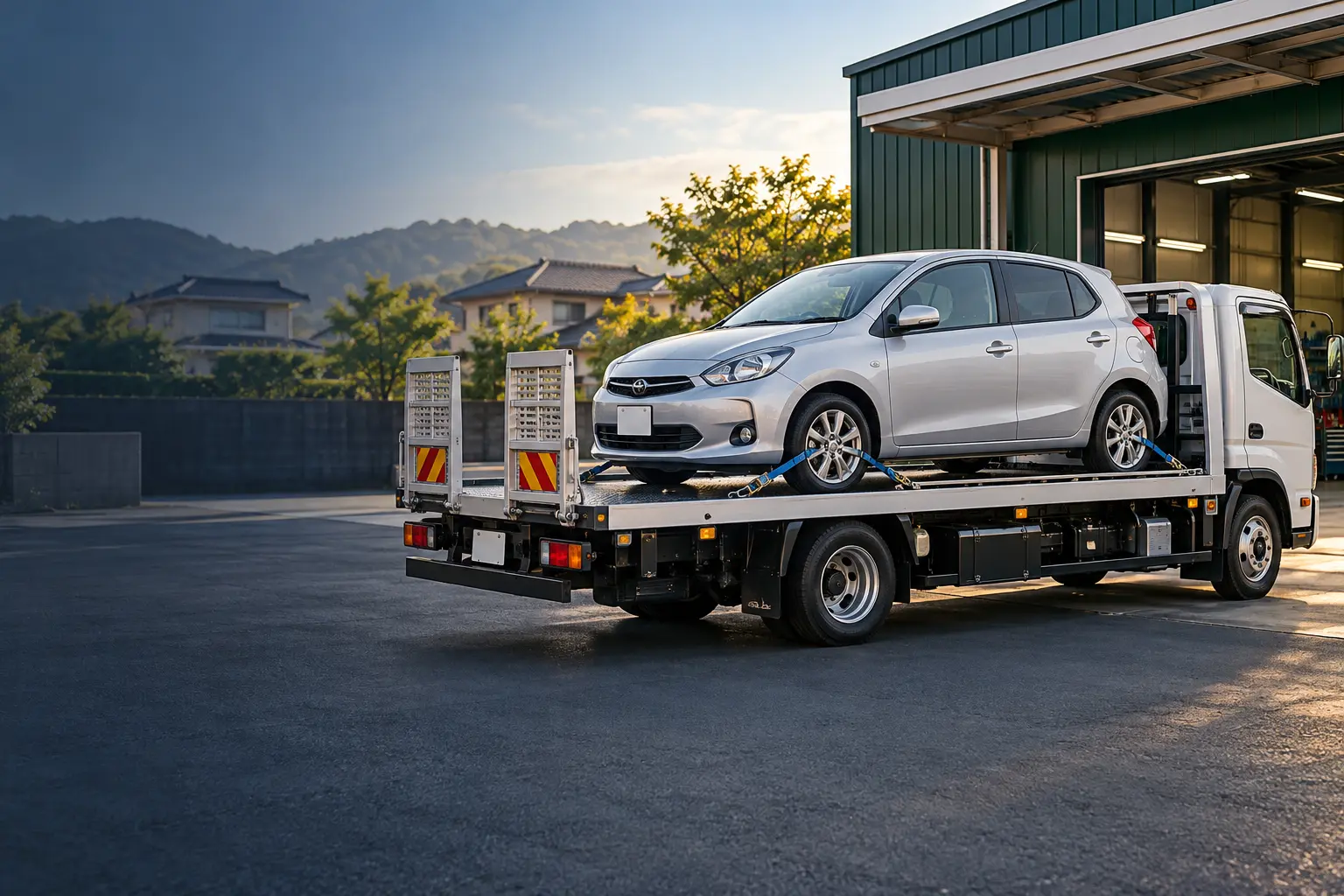
Plan shaken pickup and return with transport eligibility, itemized charges, handover records, repair approval, loan-car conditions and return checks. Includes free preparation and comparison tools.
General preparation guidance for private passenger cars. This is not a vehicle diagnosis, confirmed quote or available appointment.
Five checks for your next step.
Tick the items you have checked and identify the next question. Progress lasts while this page stays open and is not submitted.
0 / 6 items organized
These ticks are preparation notes, not official verification, identity checks or booking confirmation.
Related area and preparation resources
Direct answer: confirm the collection arrangement before planning around it
If you want a garage to collect your car for shaken and return it afterward, confirm four things before arranging your week: the collection area, the actual transport method, the full collection-and-return charge, and the agreed handover dates. A website submission alone does not establish either an inspection appointment or a collection appointment. Tell the provider about the certificate expiry and any vehicle problems at the start, because these affect the discussion about moving the car.
This guide is a practical preparation workflow. It helps you assemble a useful inquiry, compare written offers, record what you hand over, and check what comes back. It does not determine whether a particular car may legally or safely be driven, and it does not book a transporter. Those decisions need the original vehicle records and the relevant provider's assessment. 車検.jp currently provides information and free preparation tools; collection arrangements and garage acceptance are not confirmed through this article.
Start with the personal preparation sheet linked below. You can use it without giving an email address, select collection or loan-car questions, and download your own note. Take that note to a provider's official contact channel. When the reply arrives, update the unknown fields instead of assuming an unanswered question means a service is included. A short, complete record makes the next conversation more useful than sending several disconnected messages.
Source notes: 楽天Car車検|日産東京の引取・納車案内 ↗ · 楽天Car車検|車検ガイド ↗
Separate collection, return and vehicle transport
Treat collection, return and transport as separate questions. Collection describes someone receiving the vehicle from you. Return describes how you receive it back. Transport describes how the vehicle moves between those points. A short service label does not explain whether a staff member drives the car, a separate transport company carries it, or you must bring it to an agreed meeting place. Ask for the proposed method in ordinary language before accepting the arrangement.
Describe access conditions that could affect collection: a narrow approach, a height restriction, a mechanical parking system, a steep entrance, a locked gate, or a location where stopping is restricted. Share only what you can observe safely. Do not attempt a loading maneuver, push a disabled car into traffic, or improvise equipment to make the job easier. Give the provider the relevant facts and let it confirm whether it can carry out the collection.
A postal code is a useful starting point for the service-area discussion, not a complete pickup location or a promise of coverage. Japan Post's postcode resources help identify addresses; they do not certify a garage's service radius. After choosing a legitimate provider, supply the exact meeting instructions through its appropriate channel. Ask whether the quote assumes collection from a publicly accessible parking space and what happens if the actual location cannot be accessed. Keep any agreed alternative location in the same confirmation as the price and date.
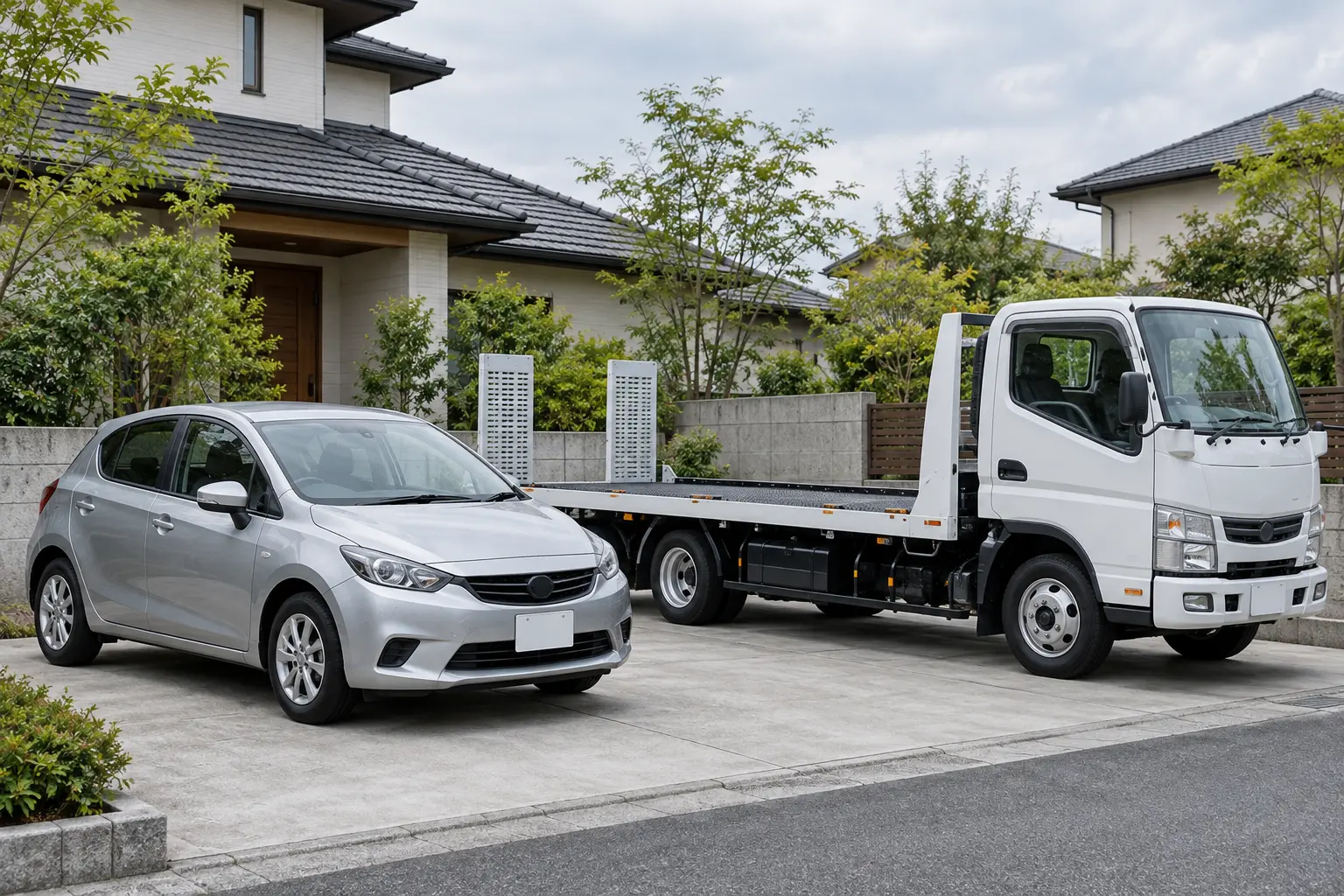
Check expiry and movement conditions first
Check the original inspection certificate or current electronic record before selecting a transport date. Check compulsory-insurance validity separately rather than inferring it from the inspection date. MLIT explains that the usual renewal window preserving the remaining certificate period begins two months before expiry under the change effective April 2025. The planning tool can calculate that ordinary window from your entry, but the entered date still needs to be correct.
An expired certificate or a concerning vehicle condition changes the conversation. Do not drive an expired vehicle on public roads simply because a workshop is expecting it. Tell the garage the situation and ask about an appropriate transport arrangement. Do not assume ordinary roadside membership covers a planned move: JAF's published FAQ excludes vehicles with expired inspection or insurance from the stated service. Confirm the provider and applicable terms rather than budgeting an assumed free recovery.
Keep three dates distinct in your note: inspection expiry, proposed collection, and proposed completion. Returning the car by Friday is a preference until a provider accepts the schedule. If a necessary part is unavailable, the vehicle may need a different plan. Ask early who will contact you, what can remain undecided, and which step requires a new decision. For warning lights, breakdown symptoms or uncertainty about movement, use the existing urgent-help guide and the vehicle's instructions rather than treating this scheduling worksheet as a diagnostic assessment.
Source notes: 国土交通省|車検を受けられる期間 ↗ · JAF|車検切れ車両のロードサービス ↗
Build an inquiry that providers can actually assess
A useful first inquiry explains the car, the place, the time constraints and the problem to solve. Include make and model, a model code if known, the broad collection area, the certificate expiry, proposed collection and return dates, whether the car starts or has a reported problem, and whether a loan car matters. Ask which additional documents the provider needs before sending certificate images or detailed personal information.
Separate preferences from essential constraints. “Friday return preferred” leaves room for discussion. “I cannot hand over keys before 18:00 on weekdays” explains a practical restriction. If a child seat or mobility need affects the replacement vehicle, describe the requirement without assuming a particular loan car is available. A provider can give a more useful response when it knows which part of the plan may change and which part cannot.
Keep a dated copy of the exact message sent to each garage. If you change the expiry information or transport condition afterward, update every garage still preparing an offer. Comparing an early quote for a running car against a later quote for a non-running car would not be a fair price comparison. Use the free preparation tool to create a starting message, then review it yourself. It does not transmit the message or choose a recipient, and copying it does not authorize any work on the car.
Source notes: 日本郵便|郵便番号データ ↗
Split the quote into charges and conditions
Ask for a written breakdown that separates statutory charges, workshop service charges, necessary repairs, optional maintenance, collection, return, loan-car costs and any other agreed fees. You are not trying to force every provider into an identical business model. You are trying to identify which services each total actually includes so that an attractive headline does not hide a different scope.
Check whether the quoted transport amount covers one direction or both. Ask whether the agreed location, distance, time window, waiting time or vehicle condition affects that amount. If a provider has not assessed a particular charge, mark it “not confirmed.” Do not enter zero merely to finish the comparison. A quote with unknown transport costs is incomplete for this decision, even if the workshop inspection price itself is clear.
Record discounts only once. If line items already show discounted amounts, avoid subtracting the same discount again from the total. Keep later points or rewards separate from the money payable to the provider. Also ask which conditions could change the quote and how you will approve changes. Our itemized comparison tool supports this process by requiring confirmed values, including an explicit zero for genuinely free or inapplicable items. Its output is arithmetic based on your entries, not evidence that a garage has accepted the scope or that the lower offer is the better service.
Worked example: compare what the totals include
Consider an invented comparison, not a market price or an offer. Garage A provides confirmed figures of ¥30,000 statutory charges, ¥15,000 service charges, ¥10,000 necessary repairs, ¥2,000 optional work and ¥1,000 for the agreed transport-related extras. It also confirms a ¥3,000 discount that has not yet been applied to those lines. The payable total is therefore ¥55,000. Every number is included only to demonstrate the arithmetic.
Garage B replies “from ¥50,000” but has not stated whether the same repair, return journey or loan-car requirement is included. It is tempting to record a ¥5,000 saving. That conclusion is premature. Write down the unknown items and request a revised, comparable scope. If B later quotes ¥6,000 transport in addition to its original amount, the price difference changes; if repair scope also differs, you still need another clarification.
Once both offers describe the same required work, compare more than the total. Which return date is confirmed? How is additional work approved? What happens if collection cannot take place? Keep optional work in its own line so you can discuss it without silently deleting a repair connected to inspection compliance. The comparison exercise should produce a short list of unanswered questions and a decision you can explain. It should not produce a “winner” just because one provider has supplied fewer details.
Use provider pages as a starting point
Use official provider pages to identify possibilities and the correct inquiry channel, then ask the selected branch to confirm the details. A page describing a collection service is useful evidence that the service is offered within its stated scope. It is not evidence of a free slot for your car, your address or your preferred day. Save the page and the date you checked it alongside the branch's written response.
Rakuten Car has a specific collection-inspection page with a defined Tokyo service area, and individual listed courses can describe whether collection and return are available or chargeable. An EPARK store page checked for this guide describes loan-car booking conditions. Autobacs' own guidance encourages asking for contact before additional work. These are examples of questions worth resolving; they are not universal terms for every branch or an indication of a 車検.jp partnership.
Avoid mixing a brand-wide advertisement, an individual branch offer and an older screenshot into one assumed package. Write the exact branch, selected course and inquiry channel on your comparison sheet. If a benefit requires a specific reservation route, ask whether your intended method qualifies before committing. Do not book through several routes simply to test benefits. First compare the terms, then choose one appropriate route and keep its reference. This prevents an unclear history of duplicate applications from becoming another problem when you need to change the date.
Source notes: 楽天Car車検|日産東京の引取・納車案内 ↗ · 楽天Car車検|車検ガイド ↗ · EPARK車検|コスモ車検 草加店 ↗
Make a handover record before giving up the keys
Prepare a simple handover record before the collection appointment. Identify the person collecting the vehicle and confirm the business arrangement through the provider's established channel if anything differs from what was agreed. List the keys, documents and accessories being handed over. Remove valuables and unnecessary cards, and make a note of anything intentionally left in the car because the garage needs it.
Where practical, record visible condition, mileage and fuel or charge level together with the collector. Photographs can support a shared record, but take them only from a safe position and avoid unnecessary images of other people or private information. The aim is a clear baseline for return, not a substitute for a mechanical inspection. Ask how an existing scratch, loose accessory or reported symptom should be described on the collection document.
Keep household keys separate from the car key where possible. Do not provide personal account passwords as a routine part of inspection collection. If the vehicle has connected features or a special access arrangement, ask what is actually necessary and how access will be limited. Confirm which documents must be originals and retain an appropriate copy of the handover record. Finish by checking the next communication: who will contact you after the assessment, through which channel, and before which decisions. You should know how to reach the responsible business while the car is away.
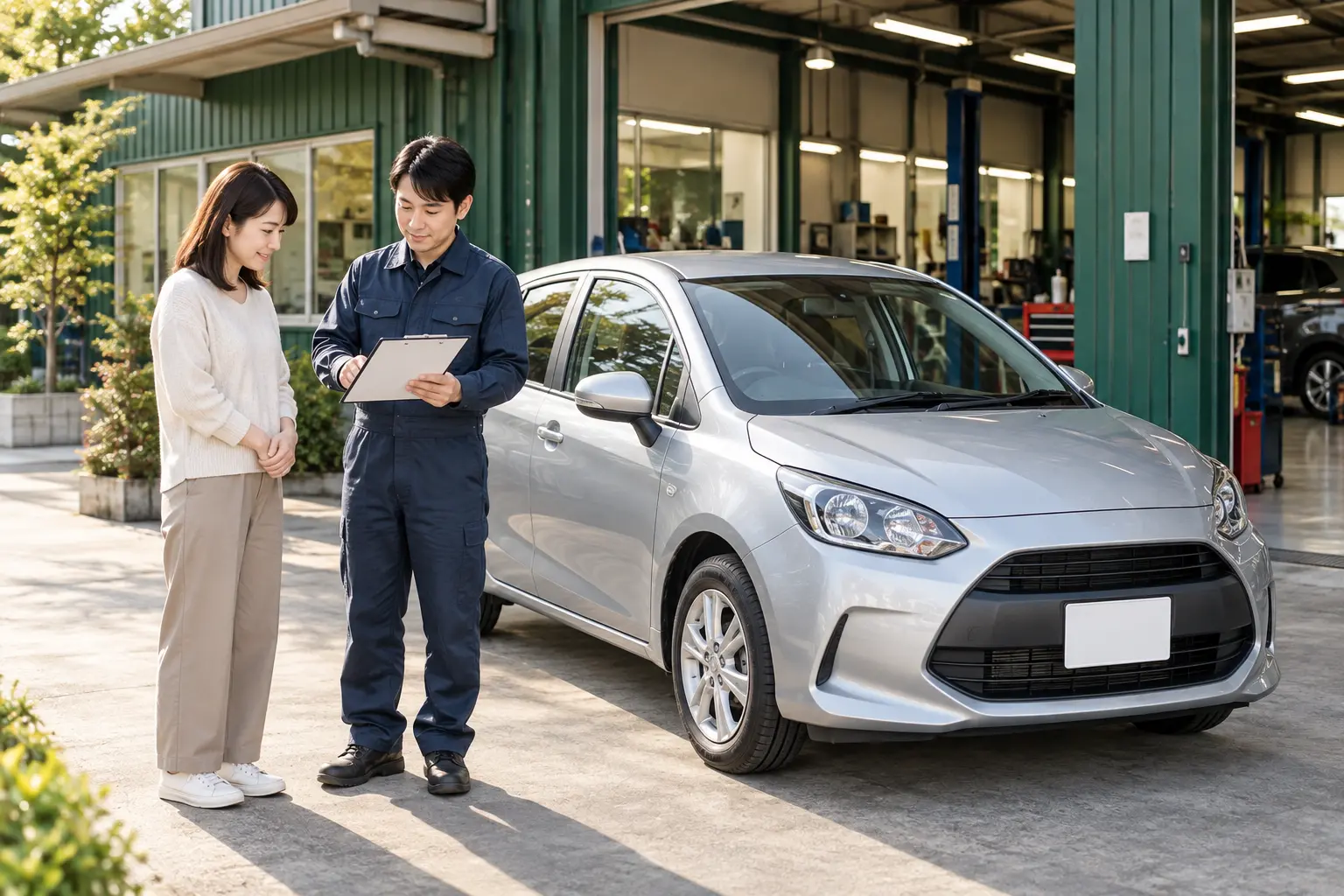
Keep repair approval separate from collection permission
Permission to collect a car should not leave the scope of repair approval ambiguous. Before handover, discuss how the garage will explain additional findings, parts, labor, the tax-inclusive price and any effect on completion. Agree how your decision will be recorded. A brief message confirming a specific task and amount is easier to reconcile later than a vague instruction to “do whatever is needed.”
Tell the garage when you may be unable to respond. Ask what will happen if it cannot reach you: whether work will pause, whether the original assessment can continue, and whether a delay could affect collection or a loan car. These are questions to agree, not promises this article can make on the garage's behalf. A spending limit also needs a defined scope; ask whether it includes all charges and whether new work beyond that limit requires a separate approval.
If a family member handles communication, identify the person authorized to make decisions and the person who only receives updates. Avoid sending conflicting instructions from several phones. Save the garage's explanation and your response together, especially if the proposed work is changed. For a costly or unclear recommendation, ask what finding supports it and whether another assessment is appropriate before deciding. Do not treat an optional-work label in a generic checklist as proof that a particular repair can safely be refused on your vehicle.
Source notes: オートバックス|車検の追加整備 ↗
Plan the loan car and daily travel separately
A workshop accepting an inspection does not automatically establish that a suitable loan car is reserved. If you need one, make it an explicit item in the inquiry. Ask about dates, eligible drivers, charges, insurance and excess, fuel, pickup and return points, and what happens if your own vehicle is not ready on the expected date. Explain any practical requirement, such as space for equipment, without assuming the available car will satisfy it.
Keep the loan-car decision separate from the decision to authorize inspection work. You may accept a garage's technical proposal but need a different transport plan for work or family commitments. Conversely, an appealing replacement vehicle should not distract you from an unclear inspection total. Compare the complete arrangement you would actually use, including any journeys needed to collect or return the loan car.
Prepare a fallback that does not depend on an unconfirmed promise. This might involve adjusting a trip, using available public transport or arranging help through someone you know, according to your circumstances. The purpose is to understand your options before the collection day, not to commit to extra spending now. If a delay occurs, ask the provider for a specific update on both vehicles. “The repair is still being assessed” and “the loan car can be kept until Monday” are different pieces of information, and each should be confirmed by the appropriate person.
Source notes: EPARK車検|コスモ車検 草加店 ↗
Handle changes without losing track of the original arrangement
When a date changes, start by establishing the present state of the job. Has the car been collected? Has diagnosis started? Were parts ordered with your approval? Has the inspection itself been completed? A change to an early collection inquiry is different from a change after authorized work has begun. Ask for a clear summary before deciding whether to move the appointment or look for another provider.
Then discuss the replacement plan: a proposed completion date, transport availability, any extra charges, and the effect on the loan car. Check these against the cancellation or change conditions you received before booking. Do not assume that changing an online request cancels every related transport arrangement, or that telling a collector automatically updates the workshop schedule. Ask which business will coordinate the change and which reference number identifies it.
If you seek a second option, describe the status truthfully and avoid confirming duplicate work. Keep the first arrangement open only as long as you understand its consequences. When a return is delayed, do not rush to retrieve the car without checking its condition and the relevant records. End the conversation with a written recap: the current job stage, the revised dates, the agreed charges or unresolved charges, and the next update time. This reduces uncertainty without pretending that a tentative date has become a guarantee.
Check the car, documents and invoice on return
At return, compare the car and supplied records with the handover note. Check that the keys, documents and accessories you listed are accounted for. Review the invoice against the work you approved, including collection, return and loan-car charges. If a description is unclear, ask for an explanation before treating the paperwork as complete. Keep the final invoice and written approvals together for later reference.
Ask the garage to explain the updated inspection records and any documents that will follow separately. A calendar reminder or an expected completion date is not evidence that the inspection has been completed. Confirm what has actually been done and what record you should use going forward. Also ask for the contact channel for questions about the performed work and the applicable warranty terms, rather than assuming every problem after return has the same treatment.
If you notice an unexpected condition, record it safely and raise it promptly with the responsible business. Describe what you observed and when, distinguishing a new observation from a conclusion about its cause. Do not drive around to test a potentially unsafe symptom. Where a safety issue is suspected, ask the garage or an appropriate assistance provider about the next step. A careful return check closes the loop on the arrangement: vehicle, paperwork, payment, communication and any remaining action should all be understandable before you file the records away.
A planning example for a busy household
Imagine a household that uses its car for weekday work and a regular weekend family journey. This is a planning example, not a customer story. The household wants Wednesday evening collection and Friday return. One garage offers an earlier collection discussion but has not confirmed a loan car; another can discuss the following week. Neither option is automatically best simply because its first proposed date is sooner.
The household first lists the hours when the car is genuinely needed, the handover times someone can attend, and the features required from any replacement vehicle. It asks both garages the same questions about assessment, completion, transport charges and delay handling. It does not describe a preference as a confirmed booking or agree to an undefined repair budget merely to secure collection.
Suppose the first garage cannot yet confirm return by Friday. The household can compare waiting for a clearer answer with rearranging the inspection discussion for the following week, provided the actual expiry and other conditions allow it. The lesson is not that delaying is better, or that collection always saves money. It is that the decision needs a realistic calendar and comparable scope. Use the personal preparation sheet to make those constraints visible. When a provider responds, change “requested” to “confirmed” only for the particular condition it has actually accepted, and keep the original response as the evidence.
Finish the checklist before committing
Before committing, review the complete arrangement once: provider identity, vehicle condition, transport method, tax-inclusive total, approval process, arrival and return timing, replacement transport, and change conditions. Leave unresolved items clearly marked. A checklist is useful because it makes omissions visible, not because ticking every box guarantees a good outcome. The tick reflects your own review and is not a substitute for the provider's response.
Download the free personal sheet if it helps you keep the conversation together. It creates a plain-text note with your chosen conditions, a question list and spaces for costs. The optional calendar file contains planning dates rather than an inspection appointment, and you need to import it and set any notifications in your own calendar. The tool does not dispatch reminder emails or send your message to a garage.
An optional email request is a separate choice, with current delivery readiness shown in the relevant form. Marketing permission is separate again. You do not have to sign up to read this guide, use the tools or download the public preparation materials. If you decide to save an inquiry, keep its private management link securely and distinguish the saved record from a garage booking. Useful preparation should reduce uncertainty today, even while referral services are still being prepared. The next decisive step is a real provider's acceptance of the actual vehicle, work and appointment conditions.
FAQ: pickup, transport and return
Can every inspection garage collect and return my car?
No. Ask the specific branch about its service area, vehicle conditions and dates. A brand name or directory listing does not establish collection availability for your address.
Does free collection include free return?
Not necessarily. Ask whether the written offer covers both directions and the agreed distance, time window and vehicle condition. Keep an unanswered item separate from an explicitly free service.
Can I drive an expired car a short distance to the garage?
Do not drive it on public roads. Tell the garage about the expiry and discuss an appropriate transport arrangement. Check compulsory-insurance validity separately as well.
Does JAF membership cover an expired car going for shaken?
JAF's published FAQ excludes inspection- or insurance-expired vehicles from the stated service. Do not assume a planned inspection move is covered recovery; confirm a suitable provider and its terms.
Is a postal code enough to confirm collection?
It helps begin an area inquiry, but the provider also needs the actual location, access, vehicle conditions and agreed timing. Confirmation must come from the provider handling the arrangement.
Should I enter zero for an unknown quote item?
No. Leave it unresolved and ask the garage. Enter zero only when the item is confirmed free or inapplicable. Otherwise the comparison would show a misleadingly low total.
Is a loan car automatically reserved with inspection?
Do not assume so. Confirm availability, dates, charges, permitted drivers, insurance and return terms separately. Explain any requirements before relying on a particular replacement vehicle.
Can a family member hand over the keys?
Ask the provider what identification, documents and authorization it requires. Clarify who can hand over the vehicle and who can approve work, so that collection permission is not confused with repair authority.
What if the return is delayed?
Ask for the current work stage, revised timing, extra charges if any, loan-car arrangements and return transport. Keep tentative dates clearly marked until the relevant provider confirms them.
Does downloading the 車検.jp sheet request collection?
No. It produces your own preparation note. Contact your chosen provider yourself and obtain acceptance of the vehicle, work, price and dates before treating the arrangement as confirmed.
Source notes: 国土交通省|車検を受けられる期間 ↗ · JAF|車検切れ車両のロードサービス ↗ · 楽天Car車検|日産東京の引取・納車案内 ↗ · EPARK車検|コスモ車検 草加店 ↗
References and primary sources
Checked: 2026-10-08. Confirm current procedures, prices and conditions with the official source and workshop. Hypothetical amounts and scenarios are not market-price guarantees or customer results.
- 国土交通省|車検を受けられる期間 ↗
- JAF|車検切れ車両のロードサービス ↗
- 日本郵便|郵便番号データ ↗
- 楽天Car車検|日産東京の引取・納車案内 ↗
- 楽天Car車検|車検ガイド ↗
- EPARK車検|コスモ車検 草加店 ↗
- オートバックス|車検の追加整備 ↗
General preparation guidance. This is not an individual vehicle assessment. See our editorial policy for sources and corrections. Editorial policy →
Turn the guide into a plan.
Organize confirmed conditions and prepare the questions for your workshop.
Open the free tool