
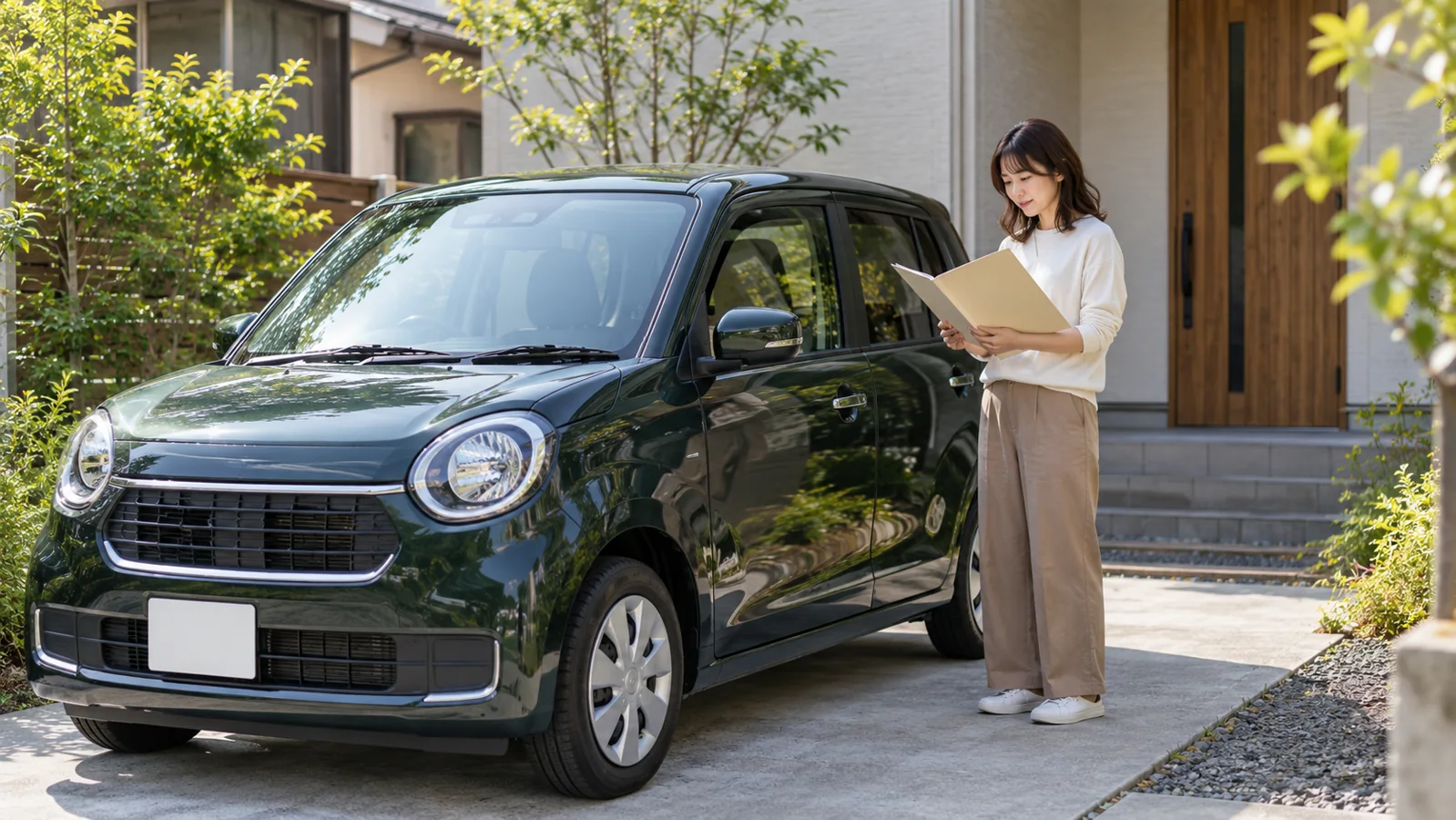
Recover missing compulsory-insurance proof, distinguish lost documents from expired coverage, check digital and paper requirements, and coordinate an inspection visit.
General preparation guidance for private passenger cars. This is not a vehicle diagnosis, confirmed quote or available appointment.
Five checks for your next step.
Tick the items you have checked and identify the next question. Progress lasts while this page stays open and is not submitted.
0 / 5 items organized
These ticks are preparation notes, not official verification, identity checks or booking confirmation.
Related area and preparation resources
Start by separating a missing document from expired insurance
If your compulsory motor liability insurance certificate has disappeared, begin by identifying the insurer or mutual insurer and the dates of the existing contract. A missing document is not the same problem as expired coverage, and neither is identical to an expired vehicle inspection. Buying another policy immediately can leave the original problem unexplained. Park safely while you establish which document is missing and which organization issued it. Keep the inspection deadline visible, but do not let a booked appointment turn an uncertain insurance situation into an assumed permission to drive.
MLIT's current guidance allows compulsory-insurance certificate data to be carried electronically, with an offline copy available for presentation. An insurer may nevertheless advise an inspection customer to obtain paper because the inspection process can request it. Those statements address different practical uses. This guide helps you ask the right questions, plan recovery and coordinate your garage visit. 車検.jp cannot look up your policy, issue an official certificate, confirm legal eligibility, arrange insurance or guarantee an appointment. Use the official insurer and inspection contact for the final decision.
Source notes: 国土交通省:自賠責証明書の電子データ・備付け ↗
Identify the document before requesting a replacement
Create four separate groups: compulsory insurance, voluntary motor insurance, inspection documents and tax documents. A renewal letter for voluntary insurance can look reassuring while proving nothing about the compulsory policy you need to recover. A payment notification may help locate the original transaction, but it should not be treated as the certificate itself. Look at the vehicle identified in each document and the coverage period rather than relying on the color of an envelope or the folder in which it was found.
For a household with two cars, label the working notes by vehicle. A document found in one glove compartment may belong to the other car, especially after a recent inspection or vehicle replacement. Ask the insurer how to match a recovered document to its contract using the official information you already hold. Do not upload identity papers, chassis numbers or photographs of certificates to this website to obtain a checklist. Recovery belongs in the insurer's authenticated process. A good preparation note records what needs confirming without creating an unnecessary second collection of sensitive paperwork.
Source notes: 日本損害保険協会:自賠責証明書の再交付 ↗
Find the issuer through a short evidence trail
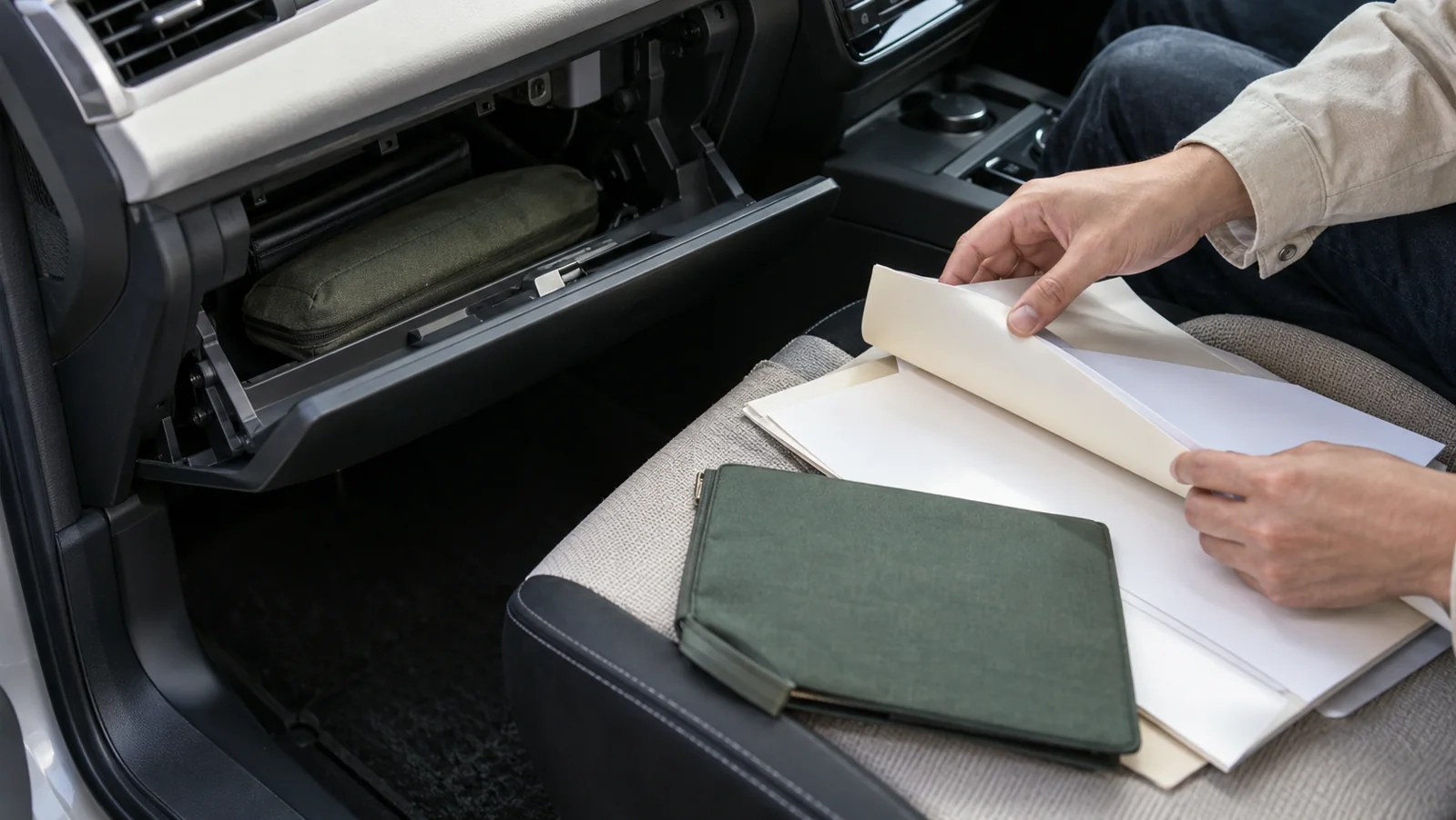
Search the previous inspection invoice, the vehicle purchase file and insurance-related messages before making several unrelated enquiries. The objective is to find the issuer, not to reconstruct every transaction in your ownership history. If the invoice names a compulsory-insurance charge without naming the insurer, ask the previous garage which organization issued that policy and how the policyholder should contact it. The garage may be able to point you in the right direction, but that does not mean every garage can access every insurer's contract or perform an immediate reissue.
Use a contact route shown on the insurer's own website or in your existing contract documents. An urgent search can expose you to advertisements that offer a different product rather than solve the lost-certificate problem. Before submitting identity evidence, establish who is collecting it, which application it supports and how to reach the official support desk if the upload fails. Keep a short log of the date, contact route and answer. This makes the next conversation more precise and reduces the temptation to restart the process with a different organization each time.
Source notes: 日本損害保険協会:自賠責証明書の再交付 ↗ · 三井住友海上:証明書の紛失・再交付と受取形式 ↗
Separate submitting a reissue request from receiving usable proof
An online application is a useful starting point, but pressing submit is not the same event as receiving proof that can be used for your particular purpose. Mitsui Sumitomo Insurance describes a One-JIBAI route and identity-document submission when the certificate is lost. Treat the stages separately: application received, information checked, procedure completed, digital delivery offered and any paper delivery arranged. The support team, rather than a general website guide, should resolve a status message or missing attachment in your account.
Make a small status card with one line for each stage and an owner for the next action. For example, you may be waiting for the insurer to complete a review while also waiting for the garage to answer which certificate format it needs. These are two separate dependencies. Neither is solved by assuming that the other party has already acted. Do not describe an application receipt to the garage as a completed certificate. If your deadline is close, share the accurate current stage and ask how it affects the appointment or transport plan.
Source notes: 三井住友海上:証明書の紛失・再交付と受取形式 ↗

Understand digital carrying and inspection presentation separately
A digital document needs to be the appropriate certificate data, not just an image that resembles it. MLIT explains that electronic certificate data should be saved before a journey so it can be presented without a network connection. That is a useful distinction for a phone with limited reception or a document link that expires. Ask the issuer how the actual certificate is supplied and how you should retain it. Do not substitute an application screenshot, a premium receipt or an old photograph simply because it is available on your phone.
Inspection presentation is a separate coordination question. Mitsui Sumitomo Insurance advises owners of inspection-subject vehicles to select postal delivery and obtain paper because paper may be requested during the procedure. Tell your garage which insurer and certificate format you have, then ask what it will require for this specific inspection. Save the answer alongside the appointment details. When the two uses are recorded separately, a family member collecting the car does not have to guess whether a mobile document, an original paper or both are needed for the agreed visit.
Source notes: 国土交通省:自賠責証明書の電子データ・備付け ↗ · 三井住友海上:証明書の紛失・再交付と受取形式 ↗
Prioritize two short conversations when the deadline is close
Contact the insurer about contract status and replacement proof, and the garage about admission documents and appointment impact. An urgent message becomes more useful when it names the actual missing item. Instead of writing only that your inspection expires soon, explain that the compulsory-insurance certificate is missing, that the insurer has or has not been identified, and that you need to know the certificate format required for the booked procedure. Give the deadline as a date, not an ambiguous phrase such as next weekend.
Build a dependency timeline rather than an optimistic promise. Write application, issuer response, certificate receipt, garage confirmation and transport decision in sequence. Fill in expected times only from the relevant party's answer. If the document is available earlier than expected, the plan can move forward; if it is delayed, the gap is visible before the appointment day. Consider a call if the deadline requires an immediate answer, but retain a written note afterward. The purpose is to reduce uncertainty, not to persuade the garage to ignore a document it genuinely needs.
Worked planning example: a weekend booking and weekday delivery
Imagine an owner with a Saturday inspection appointment who discovers the missing certificate on Wednesday evening. This is an invented planning example, not a customer outcome. The useful first task is to identify the issuer and prepare the information needed for its official process. On Thursday, the owner asks the insurer about the current reissue route and asks the garage what format it needs. The owner records two answers rather than assuming that submitting an online request means Saturday is automatically feasible.
If paper delivery is uncertain, the owner asks the garage about an appointment change or an earlier paperwork discussion and checks safe transport arrangements if necessary. No number of days is promised by this example. The benefit comes from exposing the dependency before the visit. A second owner with valid electronic data and a different garage might receive a different practical answer. The plan therefore stores the basis of each decision: which party answered, which certificate was discussed, what remains unresolved and when the owner should ask again. That is more reliable than copying another driver's timetable.
Prepare an enquiry that a garage can answer
A useful enquiry might say: I have an inspection appointment on the stated date. My compulsory-insurance certificate is missing and I am checking reissue with the issuer. Please tell me which certificate format you require, when it must be provided and whether the appointment should change if receipt is delayed. Add the vehicle category and the current application stage. That gives the garage a practical question to answer without surrounding it with unrelated insurance history or promising that the missing paperwork will arrive in time.
For an initial discussion, keep sensitive attachments out of an ordinary enquiry unless the official recipient explains why they are needed and which secure route to use. Our free enquiry-planning tool can help organize timing and questions; it does not send an insurance application or establish a confirmed booking. Before using the wording, replace every example detail with your own accurate information. Ask the recipient to distinguish what it has confirmed from what it is still checking. A short, explicit uncertainty is often more helpful than a long message that sounds certain but rests on an assumption.
Handle moving, ownership and family responsibilities carefully
A recent move adds a delivery question to the certificate question. Confirm the address that the issuer will use and whether it needs a separate contract-address update. Postal forwarding does not itself update the insurance contract or vehicle records. If a family member helps, agree who is responsible for the official application, who will receive the documents and who will speak to the garage. Support is useful, but it should not turn a helper's identity into an assumed substitute for the policyholder's authority.
For a financed, leased or company vehicle, the owner, user and insurance policyholder may be different parties. Record those roles before completing an application. If an online form appears inconsistent with the documents you hold, ask the issuer how to proceed instead of changing a name or address just to pass the screen. Keep the enquiry practical: explain the roles and ask which person or organization must act. A prepared role list helps an employer or leasing company route the request without exposing unnecessary documents to everyone involved in the vehicle's daily use.

Check the received document and build a simple storage routine
When replacement proof arrives, compare the vehicle, policyholder, coverage dates and format with the issuer's instructions. If something does not match, ask before presenting it for the inspection. A replacement request can reveal an address or vehicle-data problem that was previously hidden by the missing paper. If the original certificate turns up while reissue is underway, ask the issuer what should be retained or discarded. Do not create your own rule about which version overrides the other.
Separate current documents from historical invoices so the same confusion does not return at the next inspection. Record the official support route and the next check date in a private note. If you use digital certificate data, know where it is stored and how it can be opened when the network is unavailable. A shared family note can explain where to find the current documents without broadcasting certificate images or login details. The aim is a small repeatable routine: current proof accessible, historical records organized and the next renewal or inspection date clearly identified.
Make the cost and transport decisions independently
Do not combine replacement administration, insurance renewal, statutory inspection charges and garage service charges into one unexplained amount. Ask the relevant organization which charge, if any, applies to your situation and how it is paid. A free checklist should never be interpreted as a free official procedure. Likewise, obtaining replacement proof does not itself purchase a new period of coverage or renew the vehicle inspection. Keep those actions separate in your notes and in any quotation discussion.
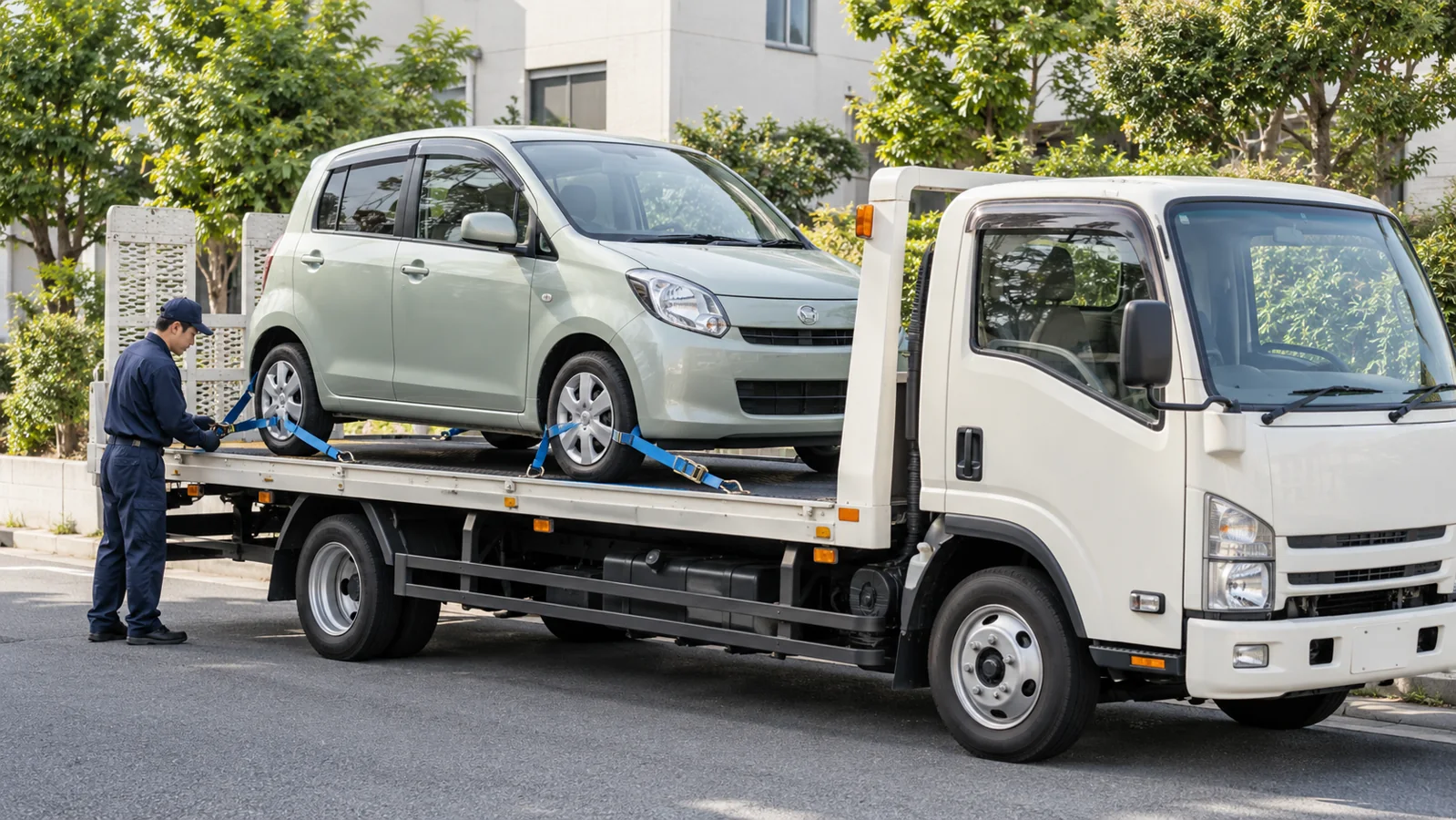
Make transport a distinct decision. If the coverage period, usable proof or inspection validity is uncertain, resolve that before driving to a counter to ask about it. Where necessary, discuss an appropriate transport arrangement rather than relying on the convenience of a short trip. A vehicle can have restored insurance documentation while still having an expired inspection or an unrelated safety defect. Ask the insurer about its document and the garage about inspection and vehicle handling. Independent confirmations are more useful than a single broad statement that everything should probably be fine.
Build a one-page recovery worksheet
Make five headings on a private page: issuer, required proof, application stage, receipt method and next contact. Under each heading, use one of three labels: confirmed, awaiting an answer or not yet checked. This small vocabulary prevents a tentative suggestion from becoming a family assumption. If the inspection date changes, revisit the contact list rather than assuming the original delivery arrangement still fits. Leave space for the person who answered and the date on which their information was obtained.
A sample worksheet could record an identified insurer, an application submitted but still under review, paper requested for the garage, and a need to confirm the receiving address. The next action is then a precise status question, not another search for a new insurer. Another owner might have an unidentified issuer and no application yet; that person's next action is to locate the previous invoice. Both situations involve a missing certificate, but their useful next steps differ. Your worksheet should reflect the real stage rather than copy an example's completed boxes.
Keep the worksheet separate from sensitive originals. It does not need a password, complete identity-document image or publicly shared certificate number to organize the work. If several relatives are involved, share only the unresolved task and who will handle it. When a response arrives, update that one task and tell the others. This avoids duplicate submissions, contradictory delivery requests and a journey made solely because one person thought somebody else had already recovered the document.
FAQ: Questions owners ask about missing compulsory-insurance proof
Does losing the paper cancel my policy?
Loss of the document and the contract's validity are different questions. Identify the issuer and check the coverage period, then recover the required proof through its official route. Do not assume cancellation or continued coverage from the condition of a folder alone.
Can my voluntary-insurance policy replace this certificate?
It is a different document. Ask which compulsory-insurance proof is needed for the specific procedure. A voluntary policy, renewal notice or payment record may help locate information but should not be silently substituted for the requested certificate.
Will reissuing the inspection certificate recover the insurance proof too?
No combined recovery should be assumed. The vehicle-inspection document and compulsory-insurance proof have different issuing processes. Contact the insurer for its certificate and the responsible vehicle office for inspection-document questions.
Can I use proof on my phone?
MLIT allows certificate data to be carried electronically. Obtain the correct data from the issuer, save it for offline presentation and separately ask what format the garage requires for the inspection. A photograph of an old document is not automatically the same thing.
Is the application receipt sufficient?
A receipt records an application stage. It does not automatically establish that the replacement certificate has been issued or satisfies the recipient's requirements. Ask the issuer and garage about the document itself, not just the status message.
Can I always receive it tomorrow?
No nationwide delivery promise is supported here. Issuer review, delivery options, holidays and your own application information affect the practical route. Ask the official support team before keeping an appointment that depends on a particular receipt date.
What if I cannot identify the insurer?
Search the previous inspection invoice, purchase file and insurance messages. Ask the previous garage which organization issued the policy if your own records remain unclear. This website cannot search private contracts on your behalf.
What changes after moving home?
Check the insurer's contract-address and delivery-address requirements. Postal forwarding is a separate service and does not update the insurance record. Give the issuer accurate current information through the appropriate process.
Can a relative apply for me?
Ask the issuer about the policyholder and any permitted representative route. A relative helping with a checklist is not automatically authorized to submit every official request. Keep identities and responsibilities accurate throughout the application.
Must I send certificate images to 車検.jp?
No. The preparation tools can be used without registration, and the official reissue belongs with the insurer. If you choose a preparation-pack email request, it does not authenticate your ownership, policy or inspection deadline.
References and primary sources
Checked: 2026-10-03. Confirm current procedures, prices and conditions with the official source and workshop. Hypothetical amounts and scenarios are not market-price guarantees or customer results.
General preparation guidance. This is not an individual vehicle assessment. See our editorial policy for sources and corrections. Editorial policy →
Turn the guide into a plan.
Organize confirmed conditions and prepare the questions for your workshop.
Open the free tool